
Seagate FireCuda 530R
Gen 4 Speed Champion With Endurance to Match
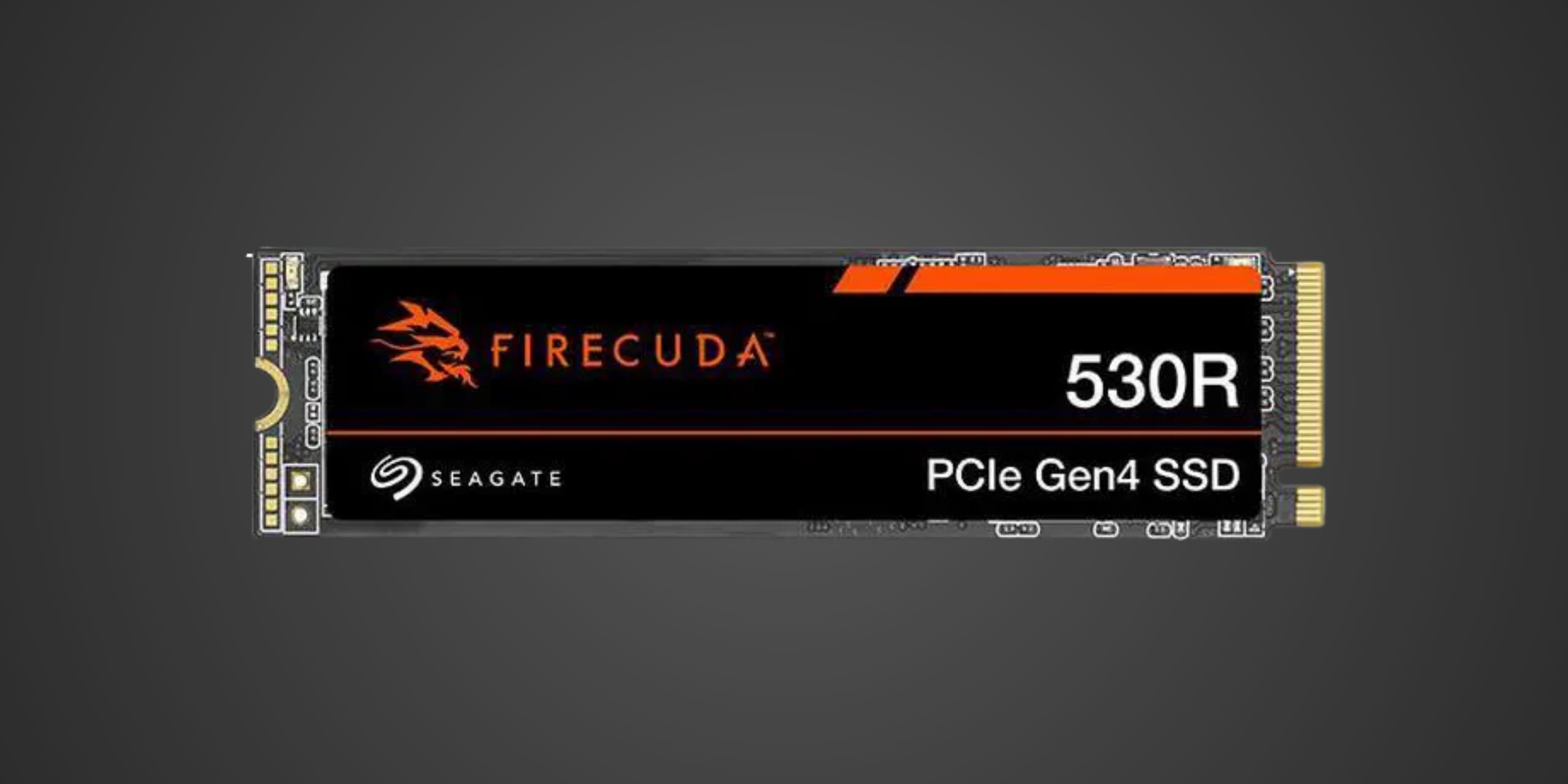
Table of Contents
Introduction
The Seagate FireCuda 530R targets enthusiasts and power users who refuse to compromise on storage performance. This PCIe Gen 4.0 NVMe drive sits at the top of the Gen 4 performance hierarchy, delivering speeds that eclipse most competitors while maintaining exceptional endurance ratings. Whether you're building a high-end gaming rig, upgrading your PS5 internal storage, or managing data-intensive creative workflows, the FireCuda 530R positions itself as a flagship option that bridges the gap between mainstream Gen 4 drives and expensive Gen 5 alternatives.
Product Overview
The FireCuda 530R arrives in the standard M.2 2280 form factor, connecting via a PCIe 4.0 x4 interface using the NVMe 1.4 protocol. At its heart sits the Seagate-validated Phison E18 controller, which represents one of the most capable Gen 4 controllers on the market and explains much of this drive's impressive performance ceiling. Paired with 3D TLC NAND flash memory, the drive includes DDR4 DRAM cache that scales with capacity, ensuring consistent performance across all workloads without relying on Host Memory Buffer workarounds.
Seagate offers the FireCuda 530R in three capacities: 1TB, 2TB, and 4TB. The drive comes in two versions—a bare drive with a thin thermal label and a heatsink model featuring an EKWB-designed cooling solution. This distinction matters significantly for thermal management, particularly in PS5 applications or compact builds where sustained performance is critical.
Performance & Real World Speed
Seagate rates the FireCuda 530R at up to 7,400 MB/s sequential read speeds across all capacities. Sequential write speeds vary slightly by capacity: the 1TB model achieves up to 7,000 MB/s, while 2TB reaches 6,900 MB/s, and 4TB hits 6,800 MB/s. These figures place the FireCuda 530R among the fastest Gen 4 drives available, competing directly with the Samsung 990 Pro and WD_BLACK SN850X.
In practical terms, these speeds translate to dramatic improvements over SATA SSDs and older Gen 3 NVMe drives. Game installations that previously took several minutes compress into seconds. Windows boot times drop to near-instantaneous levels. Large file transfers—think 50GB video project folders or multi-gigabyte game patches—complete in the time it takes to grab a coffee rather than watch progress bars crawl. The drive supports Microsoft DirectStorage API, positioning it well for the next generation of games designed to leverage direct GPU access to storage.
The Phison E18 controller backing these speeds excels at sustained performance, not just burst transfers. Unlike some competitors that rely heavily on SLC cache before performance drops dramatically, the FireCuda 530R maintains respectable speeds even during extended write operations. Random read and write performance—measured in 4K IOPS—also benefits from the DDR4 DRAM cache, ensuring snappy system responsiveness during everyday multitasking scenarios where you're launching applications, opening documents, and juggling multiple browser tabs.
Thermal Management
Gen 4 drives running at these speeds generate substantial heat, and the FireCuda 530R is no exception. The bare drive includes only a thin thermal label covering the NAND packages, which provides minimal cooling capacity. Under sustained workloads, temperatures can climb quickly without additional cooling, potentially triggering thermal throttling that reduces performance.
The heatsink version addresses this concern with an EKWB-designed aluminum cooling solution that dissipates heat more effectively. This matters particularly for PS5 users, where Sony mandates a heatsink for any M.2 expansion drive—the console's cramped internal environment and sustained gaming sessions create challenging thermal conditions. The EKWB heatsink maintains the low-profile design required to fit within Sony's dimensional restrictions (total height under 11.25mm) while providing meaningful temperature reduction.
For desktop builds, the ideal scenario involves using your motherboard's built-in M.2 heatsink if available. Modern motherboards typically include substantial aluminum heatsinks with thermal pads over their M.2 slots, often providing better cooling than add-on solutions. If your motherboard lacks adequate M.2 cooling—common on older or budget boards—purchasing the heatsink version makes sense. The 2TB and 4TB models use double-sided NAND configurations, so verify clearance if you're installing under a GPU or in a compact case where space is tight.
Compatibility
PC Compatibility
The FireCuda 530R requires an M.2 slot with PCIe support (Key M physical connector). Most motherboards from the past five years include at least one compatible slot. The drive operates on PCIe 4.0 but remains fully backward compatible with PCIe 3.0 systems, though you'll be limited to Gen 3 speeds in older platforms. Your motherboard BIOS must support NVMe for boot drive functionality, which covers essentially all boards released since 2015.
Operating system support is universal: Windows, Linux, and macOS all recognize the drive without special drivers. Power requirements are standard for M.2 NVMe drives, drawing power directly through the M.2 slot with no additional connectors required.
PlayStation 5 Compatibility
The FireCuda 530R meets PlayStation 5 internal expansion requirements with one critical caveat: you must use the heatsink version. Sony requires that any M.2 expansion drive includes a heatsink, and the FireCuda 530R with its EKWB cooling solution fits within the console's strict dimensional limits. The drive's 7,400 MB/s read speed exceeds Sony's minimum 5,500 MB/s requirement comfortably, and the standard M.2 2280 form factor matches the PS5's expansion slot perfectly.
The bare drive version will not work in a PS5—it simply won't fit or function properly without the mandatory heatsink. If you're buying specifically for PS5 use, confirm you're purchasing the heatsink model.
Xbox Series X/S Compatibility
The FireCuda 530R is NOT compatible with Xbox Series X/S internal storage expansion. Microsoft uses proprietary Seagate Storage Expansion Cards exclusively for internal expansion—no standard M.2 drives work for this purpose. You could use the FireCuda 530R in a USB enclosure for external storage of Xbox One games, but this defeats the purpose of buying a high-performance Gen 4 drive when any USB 3.0 external SSD would serve equally well.
Strengths & Weaknesses
The FireCuda 530R's primary strength lies in its exceptional endurance ratings combined with top-tier performance. The 1TB model offers 1,275 TBW (terabytes written), the 2TB version provides 2,550 TBW, and the flagship 4TB model reaches an astounding 5,050 TBW. To put this in perspective, the Samsung 990 Pro—a direct competitor—offers only 600 TBW at 1TB and 1,200 TBW at 2TB. This endurance advantage reflects Seagate's confidence in their NAND quality and means the drive should outlast typical consumer use cases by a substantial margin. The five-year warranty backing these ratings demonstrates serious commitment.
Performance consistency represents another significant advantage. Thanks to the Phison E18 controller and DDR4 DRAM cache, the drive maintains strong speeds beyond the initial SLC cache period. Many competing drives show dramatic performance drops once their cache fills, but the FireCuda 530R sustains respectable write speeds even during extended transfers. This matters particularly for content creators moving large video files or gamers installing massive game libraries.
The EKWB heatsink version solves thermal concerns elegantly for PS5 users and PC builders lacking adequate motherboard cooling. The design manages heat effectively while maintaining the low profile necessary for console compatibility, and the included rescue data recovery services for three years add peace of mind for valuable data.
Price represents the most significant weakness. The FireCuda 530R commands premium pricing—the 2TB model typically sells around $165-180, while the 4TB version approaches $350-470 depending on heatsink inclusion. Competing drives like the WD_BLACK SN850X or Crucial P5 Plus often undercut this pricing by $20-40 while delivering comparable real-world performance. The endurance premium justifies some price difference, but casual users who won't approach the TBW limits might find better value elsewhere.
The bare drive version's minimal thermal solution poses challenges. Without a motherboard heatsink or aftermarket cooler, temperatures can climb quickly under sustained loads, potentially triggering throttling. The heatsink version addresses this but adds another $30-50 to the purchase price.
Competition in the Gen 4 space has intensified. The Samsung 990 Pro matches performance while often selling for less, though it sacrifices endurance. The WD_BLACK SN850X delivers similar speeds with strong gaming credentials. Budget-conscious buyers might consider the Crucial P5 Plus, which trades some peak performance for significantly lower pricing. As Gen 5 drives become more affordable, spending premium dollars on Gen 4 technology—however excellent—requires careful justification.
Verdict: Should You Buy It?
Buy this if:
- You're upgrading from a SATA SSD or PCIe Gen 3 drive and want dramatic performance improvements
- You're expanding PS5 storage and need a fast, reliable drive with proper cooling (heatsink version only)
- You run write-intensive workloads and value exceptional endurance ratings over saving $30-40
- You're building a high-end gaming or workstation PC and want proven Gen 4 performance
- You need top-tier sustained performance for large file transfers and content creation
Skip this if:
- You already own a comparable Gen 4 drive—the upgrade would deliver marginal real-world benefits
- Budget constraints make spending an extra $30-50 over competing drives unjustifiable
- You're building a PCIe 5.0 system and want to leverage next-generation speeds
- You rarely engage in sustained write workloads that would benefit from high TBW ratings
- Competing drives like the Samsung 990 Pro or WD_BLACK SN850X offer better value at the time of purchase