WD_BLACK D30 Game Drive SSD
Speed Meets Xbox Compatibility
900 MB/s USB 3.2 Gen 2 Speed | Xbox-Optimized Design | Dual Cable Compatibility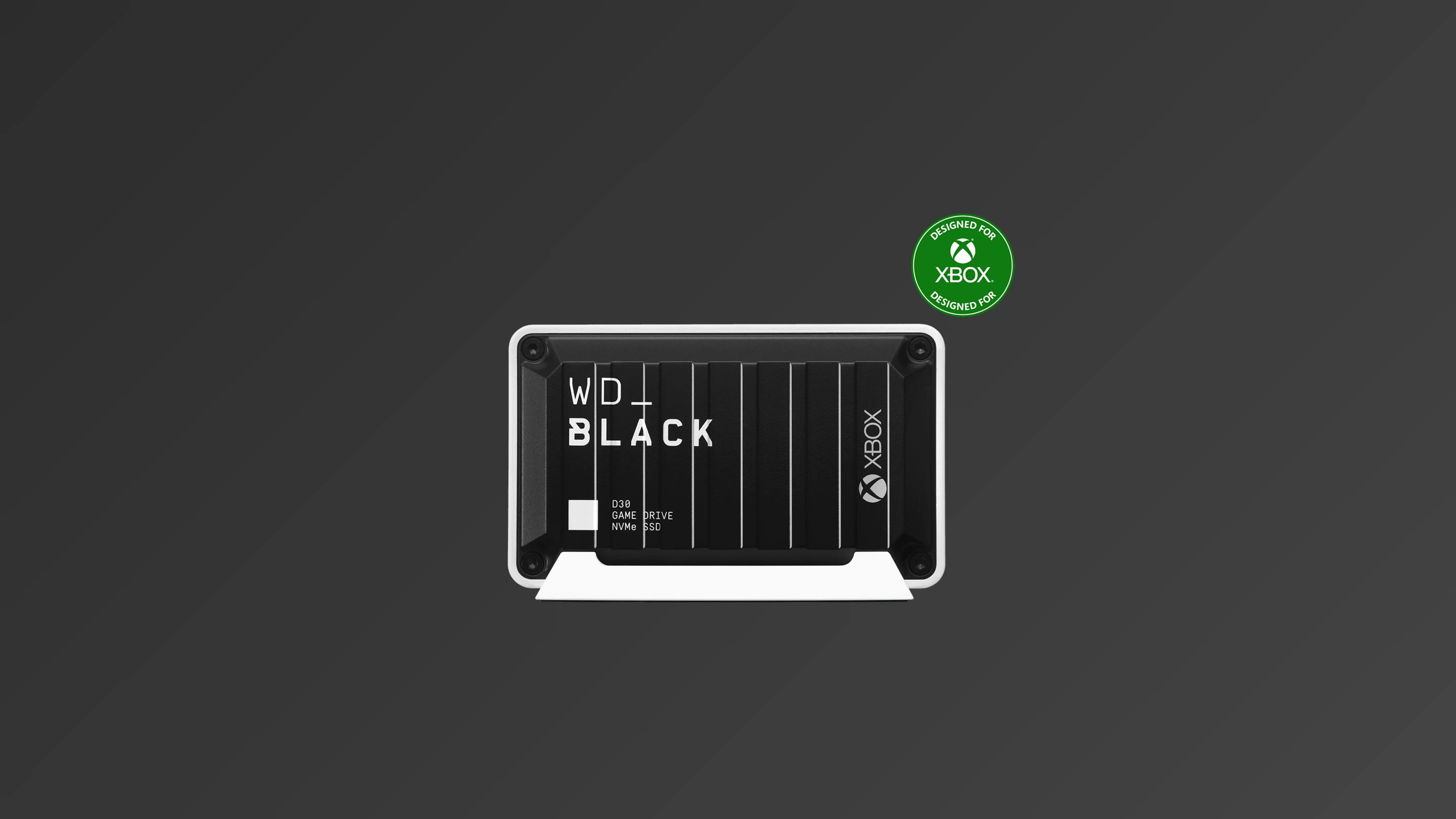
Introduction
If you're an Xbox gamer drowning in storage limitations, the WD_BLACK D30 Game Drive SSD promises to liberate your console from constant game shuffling. This external SSD targets Xbox Series X|S and Xbox One owners who need fast, reliable storage expansion without the premium price tag of Microsoft's proprietary Seagate Storage Expansion Cards. Built around USB 3.2 Gen 2 connectivity, the D30 occupies an interesting middle ground between traditional hard drives and internal expansion solutions, offering a practical way to expand your game library while maintaining decent load times.
Product Overview
The WD_BLACK D30 arrives in a compact, angular enclosure designed to complement Xbox aesthetics with its black finish and geometric styling. Western Digital offers this drive in 500GB, 1TB, and 2TB capacities, giving you flexibility based on your library size and budget. The aluminum chassis helps dissipate heat during sustained transfers while adding a premium feel that cheap plastic enclosures can't match. The drive connects via USB Type-C and includes both USB-C to USB-C and USB-C to USB-A cables, ensuring compatibility across multiple Xbox generations and PCs. The enclosure measures compact enough to tuck behind your console or entertainment center without dominating your gaming setup.
Performance & Real-World Speed
Western Digital rates the D30 at up to 900 MB/s, which represents solid external SSD performance for a USB 3.2 Gen 2 connection. In practical terms, you're looking at game install times that dramatically outpace the original 5400 RPM hard drives that shipped with Xbox One consoles. Transferring a 50GB game from your console's internal storage to the D30 should complete in roughly a minute or two, compared to the painful multi-minute waits of mechanical drives. The speed advantage becomes particularly noticeable when you're managing large game libraries and frequently swapping titles in and out of active storage.
For Xbox Series X|S owners, the D30 serves as excellent cold storage for your Xbox One backward-compatible games, which can actually run directly from this external drive with minimal performance penalty compared to the console's internal SSD. Load times for these older titles benefit from the D30's solid-state architecture, though they won't match the blistering speeds of games stored on the Series X|S internal NVMe drive. When you need to play a next-gen optimized title, you'll transfer it to internal storage, a process the D30 handles efficiently thanks to that 900 MB/s ceiling.
Build Quality & Durability
The aluminum enclosure feels reassuringly solid in hand, avoiding the flex and creak that plague budget external drives. Western Digital engineered the D30 with shock resistance in mind, though it lacks official IP ratings for water or dust protection. The drive can survive reasonable bumps and drops from desk height, but you'll want to treat it with basic care rather than testing its durability limits. The USB-C port feels firmly seated, and the included cables appear adequately constructed, though power users might consider upgrading to braided alternatives for long-term reliability.
Western Digital backs the D30 with a three-year limited warranty, which provides decent peace of mind for a storage product in this price category. The company's reputation for consumer support varies, but the warranty length suggests confidence in the hardware's longevity under normal gaming use.
Compatibility
This is where understanding the D30's capabilities becomes critical, because Xbox storage expansion involves confusing rules that trip up many buyers. For Xbox Series X and Series S consoles, the D30 cannot serve as internal expansion for next-generation optimized games. Those titles require Microsoft's proprietary Seagate Storage Expansion Cards that plug into the dedicated expansion slot on the back of the console. Standard USB drives like the D30 simply cannot run Series X|S optimized games, a frustrating limitation imposed by Microsoft's closed ecosystem approach.
However, the D30 excels as storage for Xbox One games, which both current and last-generation Xbox consoles can run directly from external USB drives. You can store hundreds of gigabytes of backward-compatible titles on the D30 and play them with minimal performance impact. For Series X|S optimized games, the D30 becomes valuable cold storage where you can archive titles you're not currently playing, then quickly transfer them to internal storage when needed. This workflow saves you from re-downloading massive game files every time you want to switch between your library favorites.
The drive works seamlessly with Xbox One, Xbox One S, and Xbox One X consoles, where it can store and play all compatible games directly. On the PC side, the D30 functions as a standard external SSD compatible with Windows, macOS, and Linux systems after appropriate formatting. The drive ships pre-formatted with exFAT, which Xbox consoles will automatically reformat to their proprietary filesystem upon first connection.
Strengths & Weaknesses
The D30's greatest strength lies in its purpose-built design for Xbox gaming, with plug-and-play simplicity that eliminates the confusion of generic external drives. The 900 MB/s performance ceiling delivers noticeably faster transfers than mechanical alternatives while keeping costs below premium Thunderbolt solutions. Western Digital's inclusion of both cable types prevents compatibility headaches, and the compact form factor allows discreet placement in entertainment centers. The three-year warranty provides reassurance that surpasses many competing external gaming drives.
The drive's aluminum construction strikes a nice balance between durability and portability, though it falls short of ruggedized enclosures with official shock and water resistance ratings. Performance represents a solid middle tier rather than cutting-edge speed, which won't bother most users but might frustrate enthusiasts accustomed to internal NVMe velocities. The inability to run Xbox Series X|S optimized games directly constitutes a significant limitation, though this reflects Microsoft's ecosystem restrictions rather than the drive's technical shortcomings.
Pricing typically positions the D30 slightly above generic external SSDs with similar specifications, so you're paying a modest premium for the Xbox-optimized branding and design. Competition from Samsung's T7 series and SanDisk's own Extreme line offers comparable performance at occasionally better value, particularly during sales periods. The drive also lacks advanced features like hardware encryption or IP67 water resistance found in premium portable SSDs.
Verdict: Should You Buy It?
Buy this if:
You own an Xbox console and need straightforward storage expansion
You're managing limited internal space and want fast storage for backward-compatible titles
You value plug-and-play simplicity over maximum performance
You frequently transfer games between consoles and need included cables for different USB configurations
Skip this if:
You primarily play Xbox Series X|S optimized games (invest in Microsoft's proprietary expansion cards instead)
You already own a comparable external SSD without Xbox-specific branding
Generic external drives with similar specs are available at better prices
You need rugged protection with official IP ratings for mobile use
-nzgzbprdbv.svg)