SanDisk Extreme PRO USB4
Premium Build, Middling Performance
USB4 Gen 3×2 40Gbps Interface | IP65 Water/Dust Resistance | 5-Year Limited Warranty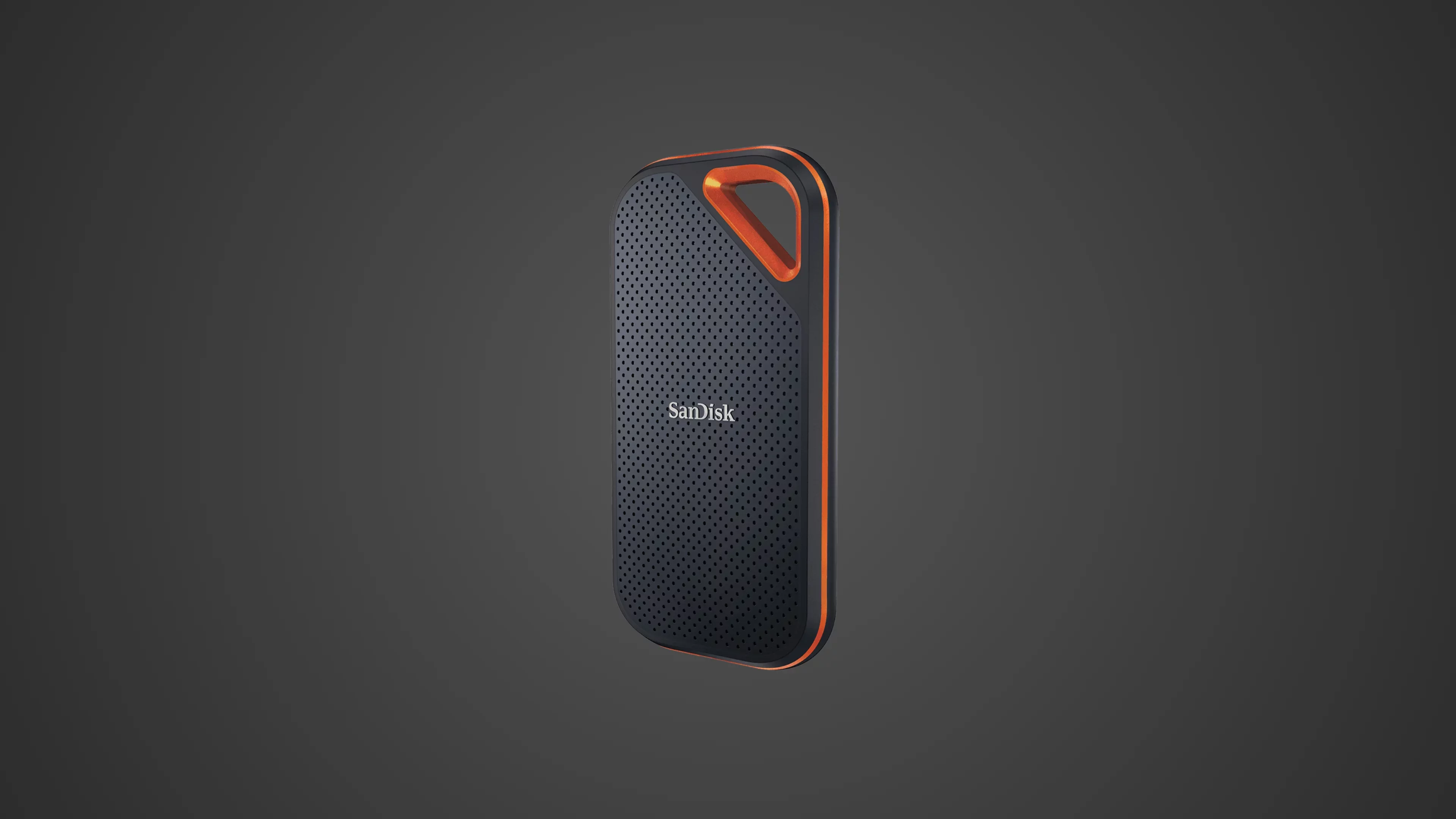
Introduction
If you've been paying attention to the external SSD market lately, you've probably noticed that USB4 drives are finally arriving to break the 2,000 MB/s ceiling that's been plaguing USB 3.2 Gen 2×2 drives for years. The SanDisk Extreme PRO with USB4 enters as SanDisk's first major portable SSD release since splitting from Western Digital, targeting creative professionals and power users who need faster-than-average transfer speeds for large media files but don't want to shell out for Thunderbolt 5 territory. Available in 2TB and 4TB capacities at $279.99 and $429.99 respectively, this drive positions itself against competitors like the Corsair EX400U and ADATA SE920, promising up to 3,800 MB/s reads and 3,700 MB/s writes through that next-generation USB4 Gen 3×2 interface. For users bouncing between 4K video projects, photo libraries measured in hundreds of gigabytes, and backup workflows that can't afford to waste time, SanDisk is betting that familiar build quality and a generous five-year warranty will justify premium pricing in a market that's suddenly gotten competitive.
Product Overview
The SanDisk Extreme PRO with USB4 is built around a full-size NVMe SSD leveraging the USB4 Gen 3×2 interface, which delivers 40 Gbps bandwidth—the same theoretical ceiling as Thunderbolt 4 but with wider compatibility across modern PCs and Macs. This isn't just another 20 Gbps drive slapped into a rugged shell—it's specifically engineered to break past the limitations that have constrained portable storage for the past several years. The drive measures a substantial 140mm × 68.7mm × 11.9mm, roughly the size of a large smartphone like the iPhone 16e, and weighs 172 grams, which makes it noticeably heftier than competitors like the Corsair EX400U. That size difference isn't arbitrary—SanDisk wraps this drive in its signature forged aluminum chassis with a protective silicone sleeve, following the industrial aesthetic that's defined the Extreme PRO line since its inception. The rubberized coating provides excellent grip and that distinctive rugged appearance, though it's also a fingerprint and dust magnet that'll require occasional wiping if you care about appearances.
SanDisk includes a USB-C to USB-C cable in the box along with quick installation and warranty guides, but notably omits any USB-A adapter—a reasonable decision given that USB4 requires Type-C ports anyway, but worth noting if you're still working with legacy systems. The drive is entirely bus-powered, drawing its juice directly from the USB port without requiring external power, which keeps the setup clean for mobile workflows. Construction quality reflects decades of refinement in the Extreme series—tight manufacturing tolerances and that solid, confidence-inspiring heft suggest this is hardware designed to survive years of bag tosses, desk drops, and the general abuse that comes with field work. SanDisk rates the drive for 2-meter drop protection and IP65 water and dust resistance, meaning it'll survive heavy rain and splashes but shouldn't be fully submerged. The drive comes backed by SanDisk's industry-leading five-year limited warranty, which stands in stark contrast to the three-year coverage most competitors offer and provides meaningful peace of mind for professional users relying on this hardware for critical data.
Performance & Real World Speed
SanDisk claims up to 3,800 MB/s sequential read speeds and up to 3,700 MB/s sequential writes for the Extreme PRO with USB4, which puts it squarely in the USB4 performance bracket alongside drives like the ADATA SE920 and Corsair EX400U. Those numbers represent theoretical maximums under ideal conditions with USB4 or Thunderbolt 4 ports—step down to USB 3.2 Gen 2×2 and you're capped at around 2,000 MB/s, while older USB 3.2 Gen 2 connections will limit you to approximately 1,000 MB/s. In real-world testing conducted by multiple reviewers including PCWorld, Tom's Hardware, and StorageReview, the drive consistently hit around 3,100–3,200 MB/s for sequential reads and 2,800–2,900 MB/s for sequential writes in benchmarks like Blackmagic Disk Speed Test. That's genuinely fast—more than double what any 20 Gbps USB drive can achieve—but it consistently trails competitors in the same price bracket.
Where things get interesting is sustained performance and small file handling. In CrystalDiskMark 8 tests, the SanDisk drive showed respectable multi-queue performance but struggled significantly with single-queue, single-thread writes—the exact scenario Windows uses for most file operations. PCWorld noted disappointingly low 4K write speeds hovering around 40 MBps in single-threaded tests, substantially slower than the Corsair EX400U and ADATA SE920. Tom's Hardware corroborated this finding, placing the SanDisk drive in second-to-last place for small file write performance among USB4 drives tested. For large sequential transfers—think copying a 100GB 4K video project or migrating photo libraries—the drive performed adequately if not spectacularly, completing a 450GB transfer test in roughly 4.5 minutes compared to the SE920's 1.5-minute advantage. That three-minute difference might sound minor on paper, but when you're dealing with multiple large transfers daily, those seconds accumulate into real productivity losses.
The drive also exhibited occasional connection issues, particularly with Intel-based Thunderbolt 4 systems, where some users reported the drive not consistently negotiating full 40 Gbps speeds on first connection. PCWorld's testing specifically called out this behavior, noting the drive sometimes required reconnection to achieve advertised speeds. An updated test bed eventually resolved these issues in their testing, but the inconsistency suggests potential compatibility quirks with certain system configurations that prospective buyers should be aware of. Heat management proved solid—multiple reviewers noted the drive remained surprisingly cool during extended transfers, with Dong Knows Tech specifically highlighting that it barely became warm even under sustained load. That's a meaningful achievement considering USB4 drives generally run hot enough to warrant active cooling solutions or substantial heat sinking.
Build Quality & Durability
SanDisk has always excelled at building bulletproof external storage, and the Extreme PRO with USB4 continues that tradition with confidence-inspiring construction that feels premium from the moment you handle it. The forged aluminum chassis provides genuine structural rigidity rather than just marketing theater—this is metal that can take impacts without crumpling—while the silicone sleeve adds both shock absorption and that grippy texture that prevents the drive from sliding across desks or slipping from your hand during rushed transfers. The ridged texture isn't just decorative; it provides functional grip when plugging and unplugging while giving the drive that distinctive industrial appearance that's instantly recognizable as part of SanDisk's professional lineup. Manufacturing quality is evident in the tight tolerances and solid feel throughout—there's no flex, no creaking, no sense that corners were cut to hit a price point.
The IP65 rating means the drive can withstand water jets from any direction and is essentially dustproof, making it suitable for outdoor photography work, on-location video production, or just general peace of mind when working in less-than-pristine environments. The 2-meter drop rating suggests SanDisk has confidence this drive will survive real-world accidents rather than just controlled lab drops onto padded surfaces. The USB-C port sits slightly recessed for added protection against cable stress and accidental damage, a thoughtful detail that extends the drive's lifespan in demanding use cases. Reviewers consistently praised the build quality even when criticizing performance, with Tom's Hardware noting the drive "feels premium" and multiple outlets highlighting that signature Extreme PRO aesthetic and tactile quality. The only real criticism centers on size—at 140mm long and 172g, this drive is substantially larger and heavier than the compact Corsair EX400U, which manages similar capacity in a noticeably smaller footprint.
That extra bulk does translate into durability advantages, providing more material for shock absorption and heat dissipation, but it also makes the drive less pocketable for users prioritizing minimal size. The rubberized coating, while excellent for grip and protection, is absolutely a magnet for dust, lint, and fingerprints—expect to wipe this drive down regularly if you're particular about appearances. While you're unlikely to showcase an external SSD the way you might display a custom PC build, the attention to materials and thoughtful design details suggest this is hardware engineered for the long haul rather than disposable electronics meant to last until the warranty expires. That five-year warranty isn't just marketing—it's SanDisk backing its confidence in the drive's ability to survive professional use over an extended service life.
Compatibility
The SanDisk Extreme PRO with USB4 is designed for universal compatibility across modern devices equipped with USB-C ports, but achieving the advertised 3,800 MB/s performance requires USB4 or Thunderbolt 4 connectivity. This is a crucial distinction that's worth emphasizing: without USB4 or Thunderbolt 4, you're paying a premium for speed you cannot access. The drive works perfectly fine with USB 3.2 Gen 2×2 systems at around 2,000 MB/s and even older USB 3.2 Gen 2 connections at roughly 1,000 MB/s, but at those speeds you're essentially overpaying for a drive that performs identically to much cheaper alternatives. SanDisk specifically recommends pairing this drive with systems featuring USB4 or Thunderbolt 4 ports, and for good reason—that's where the drive's value proposition actually materializes.
Compatibility extends across Windows 10 and newer, macOS 14 and newer, Xbox Series X and Series S, PlayStation 5, and various USB Type-C devices including tablets and smartphones. The drive ships formatted in exFAT, ensuring cross-platform compatibility out of the box without requiring reformatting unless you have specific filesystem preferences. For game console users, the drive works as extended storage for older titles but cannot run Xbox Series X optimized games or PlayStation 5 native titles directly—those require internal storage or proprietary expansion solutions due to console architecture requirements. That said, it serves admirably as overflow storage for Xbox One and PlayStation 4 libraries, providing dramatically faster load times than external hard drives. iPhone 16 users can connect the drive for ProRes video recording or large file transfers, though iOS requires a moment to recognize the drive on first connection.
One notable compatibility consideration involves Thunderbolt 4 systems, particularly those using Intel chipsets. Multiple reviewers documented occasional negotiation issues where the drive didn't immediately connect at full 40 Gbps speeds, requiring replugging or system restarts to achieve advertised performance. PCWorld specifically called out these connection quirks as a concern, though they noted that updated system firmware eventually resolved the issues in their testing. The drive includes hardware encryption support for users requiring security, adding an extra layer of protection for sensitive data without meaningful performance penalties. No USB-A adapter is included, which isn't unreasonable given the target audience and technical requirements, but it does mean you'll need to purchase a separate adapter if you're attempting to use this with legacy systems—and at that point, you really should question whether you need a USB4 drive at all.
Strengths & Weaknesses
The SanDisk Extreme PRO with USB4's greatest strength lies in its build quality and long-term reliability promise. This drive feels like professional hardware designed to survive years of hard use—the forged aluminum construction, IP65 rating, and generous five-year warranty represent genuine value for users who need storage they can trust in demanding environments. Heat management deserves particular praise, with the drive remaining remarkably cool even during extended transfers that would cause competing models to throttle or become uncomfortably hot to handle. The familiar Extreme PRO design language and materials provide immediate reassurance that this is a mature product from a manufacturer with decades of experience building durable storage, and that tactile quality genuinely matters when you're trusting hardware with irreplaceable project files or years of photographic work.
Transfer speeds, while not class-leading, still deliver meaningful improvements over previous-generation USB drives—that 3,100 MB/s sequential read performance is legitimately more than double what any 20 Gbps drive can achieve, making large file transfers noticeably faster for users working with 4K video, RAW photo batches, or massive game installs. The drive handles sustained writes reasonably well without dramatic slowdowns after cache depletion, maintaining speeds above 1,600 MB/s even during extended transfers that would cause some competitors to crater. Backward compatibility with older USB standards means the drive remains useful even when connected to systems lacking USB4, though performance obviously scales down accordingly. The plug-and-play nature is beautifully simple—no drivers, no configuration hassle, just connect and go regardless of whether you're on Windows, Mac, or even game consoles.
However, the SanDisk Extreme PRO with USB4 isn't without notable limitations. Performance, while solid in absolute terms, consistently trails competitors in the same price bracket across nearly every benchmark. The Corsair EX400U routinely hits 4,000 MB/s reads while costing $70–$80 less at both capacity points, making SanDisk's pricing difficult to justify purely on speed metrics. Small file write performance proved particularly disappointing in testing, with single-queue 4K writes hovering around 40 MBps compared to dramatically better results from the Corsair and ADATA alternatives—that's the exact workload Windows uses for most file operations, meaning real-world responsiveness suffers compared to benchmark numbers suggest. The occasional connection issues with Intel Thunderbolt 4 systems represent a troubling inconsistency that undermines user confidence, even if firmware updates eventually resolved the problems in controlled testing environments.
Physical size and weight work against portability—at 172 grams and 140mm long, this drive is noticeably bulkier than the compact Corsair EX400U or even the ADATA SE920, both of which manage similar or better performance in substantially smaller packages. The rubberized coating, while excellent for grip and protection, attracts dust and fingerprints with annoying efficiency, requiring regular cleaning if you care about appearances. Perhaps most significantly, pricing positions this drive as a premium offering without the performance to back up that premium—$279.99 for 2TB and $429.99 for 4TB lands squarely in line with the ADATA SE920 but above the Corsair EX400U, which often sells for $189.99 and $349.99 respectively while delivering superior performance. The five-year warranty partially justifies the price premium over Corsair's three-year coverage, but that value proposition depends entirely on how much you prioritize warranty duration over raw performance.
Verdict: Should You Buy It?
Buy this if: you prioritize build quality and warranty coverage over absolute maximum performance, you need a drive that can survive outdoor work environments with IP65 protection against water and dust, you specifically value SanDisk's track record and prefer the familiar Extreme PRO industrial aesthetic and materials, you have USB4 or Thunderbolt 4 systems and need noticeably faster transfers than 20 Gbps drives provide for large sequential files like video projects or photo libraries, you find the drive on sale significantly below MSRP making the value proposition more competitive with the Corsair EX400U, you're already invested in SanDisk's ecosystem and appreciate the consistency across their product line, or you specifically need the longer five-year warranty for professional workflows where drive replacement costs exceed the initial premium paid over three-year alternatives.
Skip this if: maximum performance per dollar is your primary concern and the Corsair EX400U's superior speeds at lower pricing make more sense, you prioritize compact size and minimal weight over maximum durability since the Corsair drive achieves comparable capacity in a substantially smaller package, you're price-sensitive and can find 20 Gbps USB 3.2 Gen 2×2 drives like the Crucial X10 Pro for significantly less while accepting the 2,000 MB/s speed ceiling, you don't have USB4 or Thunderbolt 4 connectivity making the premium pricing unjustifiable for speeds you literally cannot achieve, you need absolute maximum small file performance and the documented single-queue write weaknesses concern you for your specific workflow, you've experienced issues with previous SanDisk external SSDs and prefer to avoid potential compatibility quirks that some users encountered with Intel Thunderbolt 4 systems, you can wait for pricing to drop as more USB4 competition enters the market over the next six to twelve months, or you'd prefer to build your own USB4 solution with an empty enclosure like the Ugreen CM642 populated with your choice of NVMe drive for potentially substantial cost savings despite the installation hassle.
-nzgzbprdbv.svg)