SanDisk Extreme Pro USB 3.2
Rugged Speed Worth the Premium?
1050MB/s Read, 1000MB/s Write NVMe Speed | IP65 Dust & Water Resistance | 5-Year Limited Warranty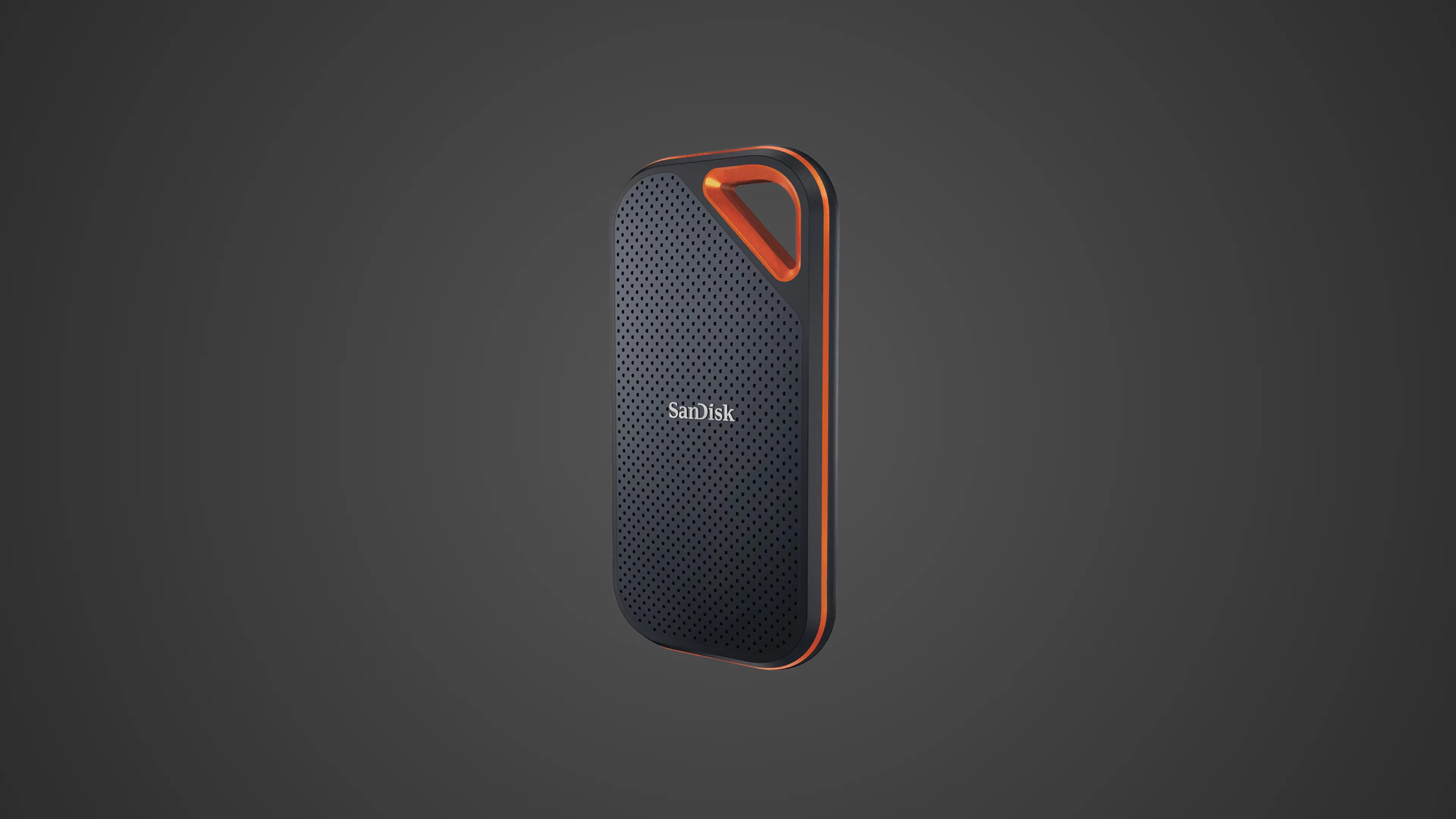
Introduction
If you're a content creator, photographer, or anyone who needs to haul around large files without babying your gear, you've probably already bumped into the eternal portable storage dilemma—do you go rugged and potentially sacrifice speed, or do you chase performance and pray you don't drop your drive in a parking lot? The SanDisk Extreme Portable SSD arrives as Western Digital's answer to this question, promising NVMe performance wrapped in a silicon shell that can handle the occasional tumble and dust storm. Available in capacities from 500GB all the way up to 8TB, this drive targets photographers, videographers, and field professionals who refuse to choose between durability and transfer speeds. With claimed speeds up to 1050MB/s read and 1000MB/s write via USB 3.2 Gen 2, the Extreme Portable positions itself squarely against the Samsung T7 Shield and Crucial X9 Pro—though it commands a slight premium for SanDisk's reputation and that upgraded IP65 rating.
Product Overview
The SanDisk Extreme Portable SSD is built around a Western Digital Blue SN550E NVMe drive paired with an ASMedia ASM2362 USB 3.2 Gen 2 to PCIe 3.0 x2 bridge chip, which translates the fast internal NVMe interface to work with standard USB-C connections. This isn't just any portable drive slapped into a rubber case—it's specifically engineered to deliver NVMe speeds through USB without requiring proprietary connectors or Thunderbolt ports that many mainstream laptops still lack.
The drive measures a compact 100.5 x 52.4 x 8.9mm, roughly the size of two stacked credit cards but about as thick as two quarters. Weight clocks in at 63 grams for the 1TB model, slightly heftier than Samsung's aluminum-bodied T7 but still light enough to toss in any bag without noticing. SanDisk wraps this hardware in its signature silicone shell—ridged, grippy, and distinctly utilitarian rather than sleek. The perforated pattern that defines SanDisk's rugged lineup returns here, providing both texture for grip and visual interest. Unlike the all-aluminum construction of competitors like the Samsung T7, this drive opts for a plastic internal structure with generous thermal padding between the drive and the front cover to manage heat during sustained transfers.
Western Digital includes a USB-C to USB-C cable plus a USB-C to USB-A adapter in the box, covering both modern and legacy systems without forcing you to hunt down dongles. A built-in carabiner loop lets you clip the drive to a bag, belt loop, or camera strap—a genuinely useful feature when you're moving between locations and don't want the drive buried at the bottom of a backpack. The Extreme Portable comes formatted as exFAT out of the box, ensuring immediate compatibility with Windows, macOS, Linux, and even compatible Android devices and modern gaming consoles.
SanDisk backs this drive with a 5-year limited warranty, which matches Crucial's offering and significantly exceeds Samsung's 3-year coverage on the T7. That extended warranty reflects confidence in durability—though it's worth noting that SanDisk's reputation took a hit in recent years when some earlier Extreme models experienced firmware issues that caused data loss. Western Digital addressed those problems with firmware updates, but the episode left some users wary. The current V2 generation appears to have moved past those issues based on user reports since its 2020 introduction.
Available capacities span 500GB, 1TB, 2TB, 4TB, and 8TB, with the larger capacities rolled out progressively. The drive also comes in three color options beyond standard black—Sky Blue and Monterey editions offer some personality if you're tired of the sea of black tech accessories cluttering your desk.
Performance & Real World Speed
SanDisk claims up to 1050MB/s read and 1000MB/s write speeds for the Extreme Portable SSD, which represents exactly double the 550MB/s performance of the original SATA-based Extreme model this drive replaced. These are peak burst speeds under optimal conditions with compatible host hardware—real-world sustained performance tells a more nuanced story.
Independent testing shows the drive lives up to its sequential read claims impressively well, with multiple reviewers recording speeds between 920MB/s and 1061MB/s depending on the test platform and conditions. TechGearLab measured 1,061MB/s sequential reads and 998MB/s sequential writes on macOS—basically hitting SanDisk's advertised figures. Tom's Hardware saw similar burst performance, while StorageReview recorded 1.04GB/s reads and 1.02GB/s writes in their four-thread testing scenario.
Write performance, however, reveals the drive's Achilles heel—a relatively small static SLC cache that fills quickly during large file transfers. Testing by multiple sources shows the drive maintains advertised speeds for roughly the first 4GB of sustained writes before the SLC cache exhausts and performance drops to direct-to-TLC speeds around 590MB/s. That's still respectably fast for most real-world scenarios, but it means transferring a 200GB 4K video project won't maintain those blazing 1000MB/s speeds the entire time—you'll see initial burst speed, then a drop to roughly half that for the bulk of the transfer.
For photographers dumping 50-100GB of RAW files at the end of a shoot, this cache behavior rarely matters—your transfers complete well within the cache window. But videographers moving multi-hundred-gigabyte video projects will notice the slowdown. In practical terms, expect a 100GB file transfer to take somewhere between 2-3 minutes rather than the sub-2-minute time pure math would suggest.
Random read performance—the metric that determines how snappy the drive feels when opening lots of small files—measured 79MB/s in some tests, which is excellent for a portable drive. Small file writes also impress, with StorageReview recording 66,585 IOPS in 4K random write testing, substantially outperforming both the Samsung T7 and Western Digital's own My Passport NVMe SSD.
One area where the Extreme Portable shines compared to competitors is thermal management during extended use. Thanks to that thermal tape integration between the drive and front cover, the Extreme stays noticeably cooler during sustained transfers than the Crucial X9 Pro, which multiple reviewers noted gets quite warm under heavy sustained writes. The Samsung T7 Shield with its aluminum construction also manages heat well, but the SanDisk finds a good middle ground between thermal performance and rugged construction.
Bottom line on performance—this drive delivers legitimate NVMe speeds that justify its positioning above basic portable SSDs like the SanDisk Portable SSD (non-Extreme), but you're paying for burst speed more than sustained performance. For most users moving files in the 5-50GB range regularly, you'll experience those full 1000+MB/s speeds. If you're regularly moving 200GB+ video projects, you'll still complete transfers faster than SATA-based external drives, but understand the drive will throttle after that initial cache fills.
Build Quality & Durability
SanDisk leans heavily on the Extreme Portable's rugged credentials, and the physical construction mostly delivers on that promise. The ridged silicone shell provides excellent grip and genuine impact protection—the drive is rated for drops up to 3 meters (roughly 10 feet), an upgrade from the original 2-meter rating. That silicon coating also provides shock absorption that plastic or aluminum alone cannot match.
The drive's IP65 rating represents a significant upgrade from the IP55 rating found on the previous generation and competitors like the Crucial X9 Pro and Samsung T7. IP65 certification means the drive is fully dust-tight and can withstand water jets from any direction at 30kPa pressure for 3 minutes. In practical terms, you can get caught in rain, work in dusty environments, or accidentally splash coffee near the drive without immediate panic. However, this isn't full waterproofing—submerging the drive in water or leaving it in a puddle will void the warranty and likely damage the electronics. The rating means water and dust resistance, not immunity.
Manufacturing quality feels solid without reaching premium territory. The silicone shell fits snugly over the plastic internal structure with no obvious gaps or loose sections. The integrated carabiner loop is thick enough to inspire confidence clipping to a bag, though it's positioned such that the drive will dangle rather than sit flush. The USB-C port fits securely without excessive wiggle, and the metal port surround feels robust enough to handle hundreds of connection cycles.
Where the Extreme Portable differs noticeably from competitors is in hand feel and perceived durability. The Samsung T7 and T7 Shield with their aluminum bodies feel more substantial and premium, like miniature MacBooks. The Crucial X9 Pro's anodized aluminum with rubber backing splits the difference. The SanDisk's all-silicon exterior feels purpose-built for abuse rather than elegance—it's a field tool, not a desk accessory. Some users will appreciate this utilitarian approach; others will wish for the premium aesthetic that aluminum provides.
The ridges serve a genuine functional purpose beyond style—they provide grip when inserting or removing the drive and give the exterior a distinctive appearance that makes the drive easy to spot in a bag. However, those same ridges also collect dust, lint, and pocket debris more readily than smooth surfaces. A quick wipe-down solves this, but it's worth noting if you're particular about equipment cleanliness.
One practical consideration—since you rarely see the drive once it's plugged into your laptop or sitting on a desk, the build quality matters most during transport and rough handling. By that measure, the Extreme Portable succeeds admirably. Multiple reviewers reported drops from desk height, throws into bags without padding, and general rough treatment without failures. The 5-year warranty suggests Western Digital stands behind this durability claim, though the earlier firmware issues with previous Extreme models remain a cautionary tale about the difference between hardware robustness and software reliability.
Compatibility
The SanDisk Extreme Portable SSD works with essentially any device featuring a USB-C or USB-A port that supports USB 3.0 or newer standards. This is a universal portable drive with no proprietary requirements, no platform exclusivity, and no complicated setup process. Plug it in, wait a few seconds for your operating system to recognize it, and start moving files.
Out of the box, the drive ships formatted as exFAT, which provides read-write compatibility across Windows, macOS, Linux, Chrome OS, modern Android devices, PlayStation 5, Xbox Series X/S, and many other platforms. This cross-platform compatibility makes the drive genuinely versatile—you can move files between your Windows editing rig, MacBook Pro, and Android phone without reformatting or conversion utilities.
The included USB-C to USB-C cable works with all modern laptops and devices featuring USB-C ports. The USB-C to USB-A adapter extends compatibility to older computers, external hard drive docks, or desktop PCs with legacy USB ports. You won't hit the drive's maximum speeds over USB-A connections limited to USB 3.0 or 3.1 Gen 1 (5Gbps) rather than the Gen 2 (10Gbps) the drive requires for full performance, but the drive still functions fine at reduced speeds.
For photographers and videographers, the Extreme Portable works seamlessly as a Time Machine backup drive for macOS (after reformatting to APFS or HFS+), a photo library storage location for Lightroom or Capture One, or a scratch disk for Premiere Pro and DaVinci Resolve. The drive's sustained performance, while not class-leading after the SLC cache fills, remains fast enough for 4K video editing directly from the drive in most scenarios, though 8K footage or high-bitrate formats may occasionally stutter.
Gamers can use the Extreme Portable as expanded storage for PS5 or Xbox Series X/S to store games, though performance won't match internal NVMe drives. You can play PS4 games directly from the drive on PS5, but PS5 games must be moved to internal storage before playing. Xbox Series games can play from the drive if they're not Xbox Series X|S Optimized titles requiring the internal SSD or proprietary expansion cards.
One notable limitation—this drive uses USB 3.2 Gen 2 with a single 10Gbps lane rather than USB 3.2 Gen 2x2 with dual 20Gbps lanes like the Crucial X10 Pro. For most users, this doesn't matter since USB 2x2 ports remain rare on PCs and nonexistent on Macs. But if you're specifically seeking maximum USB speeds and have a compatible port, drives like the Crucial X10 Pro theoretically offer more bandwidth, though real-world benefits remain marginal for most workloads.
The drive also supports SanDisk's Security software, which provides password protection and 256-bit AES hardware encryption. Setup requires downloading the software from SanDisk's website—it's not pre-installed on the drive. The encryption is hardware-accelerated, meaning it doesn't significantly impact transfer speeds once configured. Password protection works across Windows and macOS, making it useful for protecting sensitive client data when traveling. Android users can download the SanDisk Memory Zone app from Google Play to manage files and configure automatic backups from their phone to the drive.
Strengths & Weaknesses
The SanDisk Extreme Portable SSD's greatest strength lies in its balance of rugged construction and genuine NVMe performance at a price point that undercuts more premium options like Thunderbolt drives while outperforming basic USB drives. Transfer speeds genuinely hit advertised figures during burst operations, making the initial file transfers feel dramatically faster than older SATA-based external drives or mechanical portable hard drives. A 50GB photo library dump that takes 8-10 minutes on a SATA drive completes in under 90 seconds on the Extreme Portable when you're working within that SLC cache sweet spot.
The IP65 rating represents meaningful protection for field work rather than marketing theater. Photographers working in dusty desert conditions, videographers shooting near waterfalls or in rain, and outdoor professionals who can't baby their gear will appreciate the peace of mind. That 3-meter drop protection combined with the shock-absorbing silicone shell means the drive survives the occasional tumble from a camera bag or belt clip—scenarios that would leave dents in aluminum-bodied competitors.
Western Digital's 5-year warranty provides genuine value and signals long-term reliability confidence. Compared to Samsung's 3-year coverage on the T7, that extra two years matters for professionals who depend on their storage gear and need it to last across multiple projects and years. The warranty itself won't recover data if something fails, but it ensures hardware replacement without out-of-pocket costs during that coverage window.
The carabiner loop, while seemingly trivial, proves genuinely useful in practice. Being able to clip the drive to a camera bag strap, backpack loop, or belt keeps it accessible without fishing through bag compartments. For shooters moving between locations quickly, that convenience compounds over a day of work.
However, the SanDisk Extreme Portable isn't without notable limitations that buyers should understand before committing.
The small SLC cache creates a performance cliff during large file transfers. That drop from 1000MB/s to 590MB/s after roughly 4GB of sustained writing won't matter to most photographers, but videographers regularly moving 200GB+ project folders will notice the slowdown. The drive remains faster than alternatives during this throttled state, but the marketing materials emphasize those peak speeds without explaining cache behavior. Competitors like Samsung and Crucial face similar limitations—this is an industry-wide trait of consumer portable SSDs—but it's worth understanding the drive you're buying won't maintain peak speeds indefinitely.
Pricing sits slightly higher than direct competitors when comparing identical capacities. The 1TB Extreme Portable typically retails around $100-130 depending on sales, while the Crucial X9 Pro often appears at $90-100 and the Samsung T7 fluctuates between $85-110. That $10-20 premium over Crucial buys you the IP65 rating upgrade from IP55 and the longer warranty, but value-conscious buyers might question whether those improvements justify the cost difference. The Samsung T7 Shield—which also offers IP65 protection and includes a full rubberized case—often matches the SanDisk's pricing, creating direct competition for the same buyer.
The silicon shell, while functional for grip and protection, collects pocket lint, dust, and debris more readily than smooth aluminum finishes. If you're carrying the drive loose in bags or pockets regularly, expect to wipe it down periodically. This is admittedly minor, but worth noting for users who appreciate low-maintenance gear.
SanDisk's reputation took a hit following firmware issues with earlier Extreme models that caused data corruption and loss for some users between 2022-2023. Western Digital addressed those problems with firmware updates, and reports suggest the current generation doesn't suffer similar issues, but the episode understandably left some users wary of SanDisk portable storage. Buyers who experienced or heard about those problems might opt for Crucial or Samsung based purely on brand trust despite the technical merits of the current hardware.
The drive lacks Thunderbolt support, capping maximum speeds at USB 3.2 Gen 2's 10Gbps rather than Thunderbolt 3/4's 40Gbps potential. For most users with mainstream laptops, this doesn't matter—USB-C is universal while Thunderbolt remains a premium feature. But creative professionals with Thunderbolt-equipped MacBooks or high-end Windows workstations might prefer options like the SanDisk Extreme Pro Portable that leverage that bandwidth, even at significantly higher cost.
The real competition isn't between the SanDisk Extreme, Samsung T7 Shield, and Crucial X9 Pro—these drives are functionally similar with minor trade-offs. The real competition is between paying $100-130 for a 1TB rugged portable SSD versus spending $50-70 on a basic 1TB USB drive that lacks the speed and protection, or investing $200+ in a Thunderbolt SSD that delivers more bandwidth than most users can utilize. For the middle ground between those extremes, the Extreme Portable represents solid value, though it's not the obvious choice it would be with more aggressive pricing.
Verdict: Should You Buy It?
Buy this if: you're a photographer, videographer, or content creator who regularly moves 5-100GB project files and needs storage that survives field conditions, particularly if you work in dusty or wet environments where IP65 protection matters, you value the 5-year warranty for professional peace of mind and want genuine NVMe speeds through standard USB-C without requiring Thunderbolt ports, you find the drive on sale closing the price gap with Crucial and Samsung competitors, or you specifically want Western Digital's reputation for professional storage backing your portable drive despite past firmware controversies.
Skip this if: you primarily transfer files smaller than 20GB where even basic SATA portable SSDs feel fast enough and the price premium for NVMe performance doesn't justify the cost, you're moving massive 200GB+ video projects daily where the limited SLC cache means you'll spend significant time in the throttled 590MB/s state rather than experiencing peak speeds, you can find the Samsung T7 Shield or Crucial X9 Pro at $20+ less during sales and don't need the extra warranty years or marginal IP65 upgrade from IP55, you already own a Thunderbolt-equipped laptop and want to invest in maximum-speed storage regardless of cost, or you're still concerned about SanDisk's past firmware issues and prefer the peace of mind that comes with Samsung's or Crucial's more consistent track record.
-nzgzbprdbv.svg)