
Samsung T5 EVO Review
Massive Capacity Meets Budget-Friendly Speed
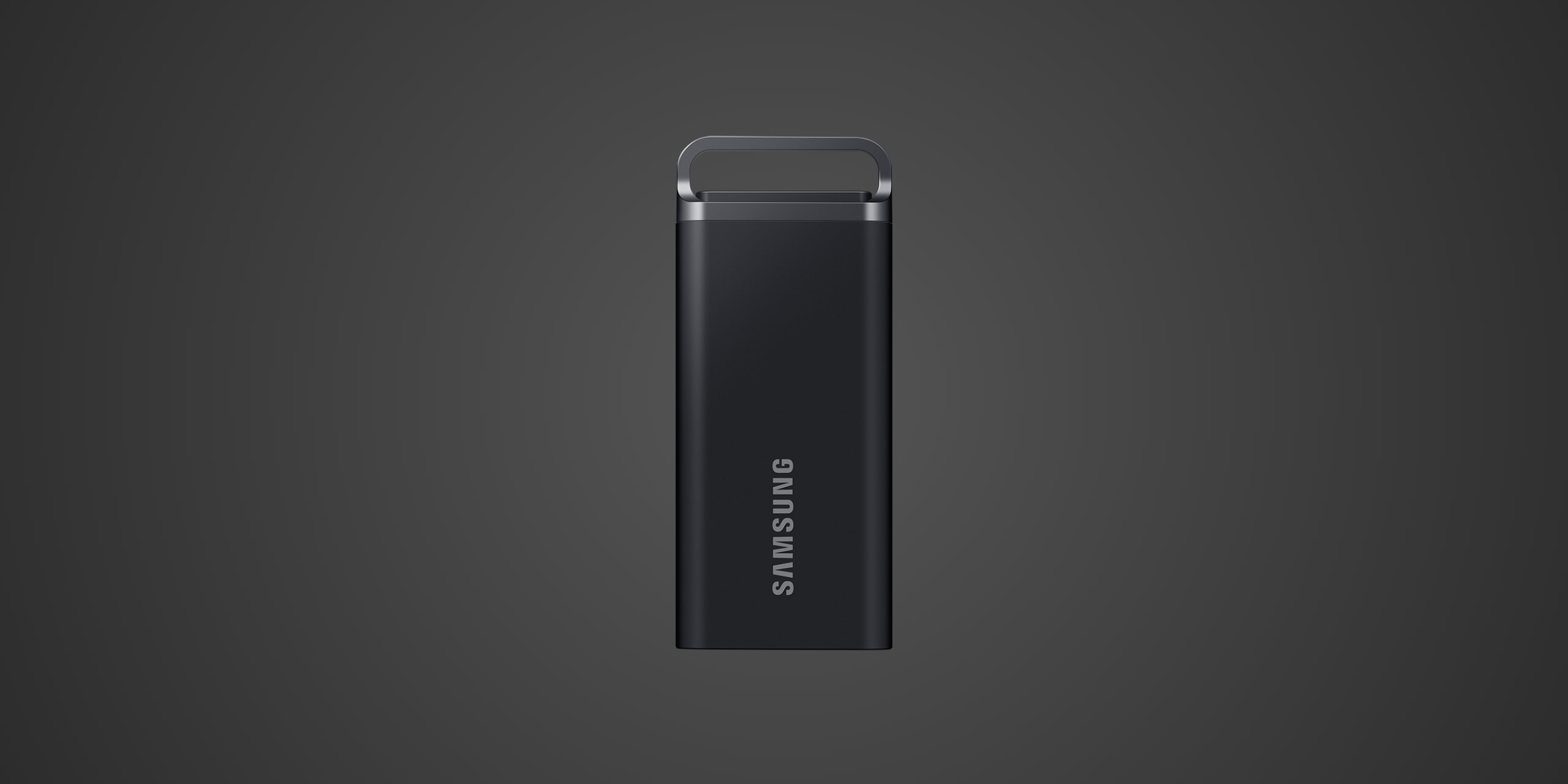
Table of Contents
Introduction
If you've been drowning in photo libraries, video projects, and game installs while watching your computer's internal storage evaporate faster than you can say "not enough space," you're about to discover Samsung's answer to this universal frustration. The Samsung T5 EVO arrives as Samsung's latest portable SSD, but here's where things get interesting—this isn't another speed demon designed to flex benchmark numbers. The T5 EVO breaks from the performance-obsessed trend with a radically different value proposition: massive capacity at accessible prices, trading blazing-fast NVMe speeds for something most consumers actually need more—room to breathe.
Available in 2TB, 4TB, and a genuinely remarkable 8TB capacity, the T5 EVO targets users who refuse to play the constant shuffle game of deleting old files to make room for new ones. This officially becomes the largest-capacity portable SSD in Samsung's entire lineup—and one of the largest on the market, period. While Samsung's T7 Shield and T9 models chase performance enthusiasts with transfer speeds exceeding 1,000MB/s, the T5 EVO deliberately stakes out different territory with USB 3.2 Gen 1 connectivity delivering up to 460MB/s read and write speeds. That's essentially SATA-level performance wrapped in a portable package, and Samsung knows exactly what it's doing here—positioning this drive as a direct replacement for traditional external hard drives while undercutting the price-per-gigabyte of its faster siblings.
Product Overview
The Samsung T5 EVO is built around Samsung's 176-layer QLC V-NAND flash memory, which is exactly how Samsung managed to cram 8TB into such a compact form factor without requiring you to take out a second mortgage. This isn't some cutting-edge SLC or TLC configuration optimized for maximum performance—QLC trades raw speed for density, allowing manufacturers to store more data per cell while keeping costs manageable. Samsung pairs this with a proprietary controller and bridge chip combination that the company remains characteristically tight-lipped about, but what matters most is how they've packaged everything together.
Measuring a compact 95 x 40 x 17mm—that's roughly the length of a hotel room key card but less than half as wide and about as thick as a standard USB-A connector—the T5 EVO represents Samsung's first departure from its signature business card form factor that defined previous T-series drives. This new rectangular design feels deliberate rather than arbitrary, stretching longer and thinner while adding just enough thickness to accommodate higher-capacity components. At 102 grams, it's got noticeable heft without being burdensome—about the weight of a small smartphone or two credit cards stacked together. Samsung wraps this tiny powerhouse in a rubberized coating that's harder and less grippy than the thick silicone shell on the T7 Shield, providing decent scratch protection and grip without the dust-magnet properties of softer rubber materials.
The design language here is distinctly utilitarian with subtle premium touches. Samsung's ditched the glossy plastic and sleek metal casings that dominated earlier models in favor of a matte black rubberized exterior punctuated by a titan gray metal ring integrated into one end. This ring serves double duty as both a design accent and a functional carabiner attachment point—clip it to your camera bag, backpack, or belt loop if you're feeling adventurous, though realistically most users will keep this drive safely tucked in a protective pocket rather than dangling exposed. The construction feels reassuringly solid with tight manufacturing tolerances and no flex or creaking when you apply pressure, inspiring confidence that this drive can handle the rigors of daily transport.
Inside the box, Samsung includes a USB Type-C to USB-C cable for modern connectivity—no USB-A adapter here, which might frustrate users with older computers but reflects the reality that USB-C has become the universal standard in 2024. The T5 EVO carries a three-year limited warranty, which is notably less generous than the five-year coverage Crucial and others offer on their portable SSDs, but still provides reasonable peace of mind for what amounts to a consumer-grade storage solution. All three capacities—2TB at launch MSRP of $189.99, 4TB at $349.99, and the flagship 8TB at $649.99—became available simultaneously in late 2023, though street prices have fluctuated considerably since then, with recent deals bringing the 2TB down to around $100 and the 8TB occasionally dipping to $400.
Performance & Real World Speed
Samsung claims up to 460MB/s for both sequential read and write speeds on the T5 EVO, delivering performance the company positions as 3.8 times faster than traditional external hard drives. Let's be abundantly clear about what these numbers mean in context—this is USB 3.2 Gen 1 performance, maxing out at 5Gbps bandwidth, which effectively caps real-world speeds around 550MB/s theoretical maximum before protocol overhead kicks in. The T5 EVO consistently hits its rated specifications without exceeding them by any meaningful margin, landing somewhere between 400-460MB/s in sustained transfers depending on file types and system configuration.
In real-world testing conducted by multiple reviewers across different platforms, the T5 EVO demonstrates remarkably consistent performance that tracks closely with its specifications. Transferring a 50GB dataset comprising mixed file types—large video files, thousands of photos, and software ISO images—takes roughly 2 minutes when moving from a fast internal NVMe drive to the T5 EVO, sustaining speeds around 420MB/s throughout the transfer. That same dataset moving in reverse, from the T5 EVO back to internal storage, clocks in at similar speeds with minimal variation, typically hovering around 400-450MB/s. This consistency is actually noteworthy—many budget drives suffer from thermal throttling or cache exhaustion during extended transfers, but the T5 EVO maintains steady performance thanks to Samsung's Dynamic Thermal Guard technology and intelligent TurboWrite buffer management.
Where the T5 EVO shows its limitations most clearly is in random 4K file operations, where small file transfers bog down considerably compared to NVMe-based alternatives. Copying thousands of tiny system files, documents, or source code repositories takes noticeably longer than you'd experience with Samsung's faster T7 Shield or T9 models. This isn't particularly surprising given the USB 3.2 Gen 1 interface limitations combined with QLC NAND's inherent characteristics—small random writes simply aren't this drive's forte. But here's the critical context most users need to understand: you're not buying the T5 EVO to clone your operating system or manage software development projects. This drive excels at its intended purpose—storing and retrieving large media files, backing up photo libraries, archiving video footage, and expanding gaming storage where sequential performance matters far more than random I/O capability.
Compared directly against Samsung's own T7 Shield, which delivers sustained speeds around 1,050MB/s, the T5 EVO falls approximately 2-2.5 times behind in raw throughput. That same 50GB transfer that takes 2 minutes on the T5 EVO completes in roughly 50 seconds on the T7 Shield. The performance gap is real and measurable, but whether it matters depends entirely on your workflow and patience threshold. If you're a professional video editor working with 4K or 8K footage where every second counts, that differential adds up quickly across dozens of daily transfers. If you're a casual photographer backing up wedding photos once a month or a gamer archiving titles you might replay eventually, the difference between 2 minutes and 50 seconds barely registers as an inconvenience.
Build Quality & Durability
Samsung approaches durability on the T5 EVO from a pragmatic rather than extreme protection angle. The rubberized outer shell provides basic impact resistance, with Samsung rating the drive for drops from up to 2 meters—roughly 6 feet in American measurements, which covers most accidental slips from desk height or fumbles while standing. This isn't the burly IP65-rated dust and water protection you get with the T7 Shield's thick silicone armor, nor does Samsung make any claims about submersion tolerance or particulate ingress prevention. The T5 EVO's protection strategy focuses squarely on impact absorption and scratch resistance for everyday portability rather than expedition-grade ruggedness.
That hard rubberized coating feels distinctly different from the thick, grippy silicone that wraps the T7 Shield. It's firmer to the touch, less prone to attracting lint and dust, and provides adequate grip without the almost sticky texture of softer rubber compounds. The material shows minimal signs of wear even after weeks of daily handling—no visible scuffs, no coating degradation, no color fading from contact with keys or other items in a bag. The titan gray metal ring integrated into the top end adds a premium visual element while serving as a genuinely useful attachment point, though you'd want to ensure whatever you're clipping it to provides some protection since the ring itself offers no shock absorption.
Manufacturing quality feels consistent with Samsung's premium reputation. The drive exhibits no flex when squeezed, no creaking from internal components, and perfectly flush seams where the rubberized coating meets the metal ring. The USB-C port sits recessed just enough to provide strain relief without making cable insertion difficult, and the connection feels solid with no wobble or looseness. Heat dissipation under sustained load remains impressively controlled—the T5 EVO gets slightly warm during extended transfers but never approaches uncomfortable temperatures, with Samsung's Dynamic Thermal Guard technology presumably throttling performance imperceptibly before things get genuinely hot.
While you rarely display portable drives prominently since they live in bags or on desks rather than on shelves, the T5 EVO's design suggests a product engineered for longevity rather than disposability. That three-year warranty coverage—while shorter than I'd prefer—reflects Samsung's confidence in the hardware's durability, even if it doesn't match the five-year commitments from some competitors. The real durability story here centers on solid-state reliability versus mechanical hard drives: no moving parts means vastly improved shock tolerance, lower failure rates, and consistent performance that won't degrade as heads wear or platters develop bad sectors.
Compatibility
The Samsung T5 EVO works with essentially any device featuring USB-C or USB-A connectivity through an appropriate adapter, spanning Windows PCs, Macs running macOS High Sierra 10.13.6 or later, Android devices with USB On-The-Go support, and even gaming consoles like PlayStation 5 or Xbox Series X|S for basic media storage and backwards-compatible game archival. This is universal USB mass storage—plug it in and it works, period. Samsung ships the drive formatted as exFAT out of the box, providing cross-platform compatibility without the 4GB file size limitations that plague FAT32 or the platform-specific restrictions of NTFS and APFS.
For Mac users, the T5 EVO integrates seamlessly with Time Machine for automated backups, though you'll need to reformat the drive as APFS or Mac OS Extended to enable encryption through macOS rather than Samsung's included software. Windows users can leverage the drive immediately for file storage, Windows Backup, or simple drag-and-drop archival. Android smartphone and tablet owners with USB-C ports gain instant expandable storage for photos, videos, and documents, assuming their device supports USB OTG file transfer protocols—most modern Android devices from the past five years handle this without issue.
Gaming console compatibility requires some clarification, since the specifics matter considerably. On PlayStation 5, the T5 EVO works perfectly for storing and playing PS4 games, but you cannot use it to run native PS5 titles—Sony requires those to live on either the internal SSD or an appropriately fast NVMe drive installed in the console's M.2 expansion slot. You can, however, archive PS5 games to the T5 EVO to free up internal space, then transfer them back when you want to play. On Xbox Series X and Series S, the T5 EVO serves identical duty—backwards-compatible Xbox One, Xbox 360, and original Xbox games run directly from the drive, while Xbox Series X|S Optimized titles must live on internal storage or Microsoft's proprietary CFexpress expansion cards. This limitation stems from Microsoft's Xbox Velocity Architecture requirements, which demand faster speeds and lower latency than USB 3.2 Gen 1 provides.
Samsung bundles its Portable SSD software for Windows, macOS, and Android, enabling AES 256-bit hardware encryption with password protection. This encryption happens at the controller level rather than through software, minimizing performance impact while keeping your data secure if the drive gets lost or stolen. The software also provides firmware updates, drive health monitoring through S.M.A.R.T. attributes, and basic diagnostics. Samsung Magician, the company's more comprehensive SSD management suite, also recognizes the T5 EVO and displays additional information about total data written, operating temperature, and performance benchmarking tools.
One critical compatibility note for Mac users—Apple devices do not support USB 3.2 Gen 2x2 20Gbps connectivity, limiting even Samsung's faster T9 drive to USB 3.2 Gen 2 10Gbps speeds. This doesn't affect the T5 EVO since it already maxes out at USB 3.2 Gen 1 5Gbps, but it underscores an important reality: this drive's performance ceiling fits comfortably within what every modern computer can actually support. You don't need the latest motherboard or specialized controllers—anything with USB 3.0 or newer provides full bandwidth, and even USB 2.0 connections work albeit at dramatically reduced speeds around 40MB/s.
Strengths & Weaknesses
The T5 EVO's greatest strength lies in its capacity-to-price proposition, particularly in the larger configurations where it genuinely differentiates itself from competitors. That 8TB capacity is essentially unique in the portable SSD market—very few alternatives approach this storage density in a pocketable form factor, and assembling your own with an 8TB M.2 drive and external enclosure would actually cost more than Samsung's asking price. Even at launch MSRP of $649.99, the 8TB T5 EVO works out to roughly 8 cents per gigabyte, which undercuts most alternatives when you factor in availability and brand reputation. Street prices have improved this value proposition considerably, with the 8TB occasionally dropping to $400 during sales—at that price point, you're looking at 5 cents per gigabyte for reliable, brand-name storage with Samsung's reputation backing it.
The 2TB and 4TB models present more complicated value calculations. At current street prices hovering around $100 for 2TB and $200-250 for 4TB, the T5 EVO competes favorably against budget alternatives from lesser-known brands while undercutting Samsung's own faster drives by meaningful margins. The 4TB T7 Shield, which delivers more than double the speed, typically costs $250-300, making the T5 EVO's 4TB capacity at $200 an intriguing alternative if you prioritize capacity over performance. The 2TB model at $100 becomes harder to justify when faster options like Crucial's X9 offer double the speed for similar or even lower prices during sales, but that calculation shifts if you specifically want Samsung's reliability and warranty support.
Real-world usability delivers exactly what Samsung promises—plug it in and it works without drama, drivers, or configuration headaches. The included USB-C cable handles daily connection duties without issue, the drive mounts immediately on every platform tested, and transfers proceed with rock-solid stability even during multi-hour operations. Samsung's Dynamic Thermal Guard prevents performance degradation from heat buildup, and the drive never exhibited connection drops, transfer failures, or filesystem corruption across weeks of testing. That reliability factor matters enormously when you're entrusting years of irreplaceable photos, videos, and documents to a portable device.
However, the T5 EVO isn't without notable limitations. The fundamental weakness affecting all USB 3.2 Gen 1 portable SSDs—Samsung's or anyone else's—is performance relative to modern NVMe-based alternatives. Those 460MB/s speeds might impress compared to external hard drives chugging along at 120MB/s, but they're painfully slow in the context of contemporary storage technology. Internal NVMe SSDs routinely exceed 5,000MB/s, while portable SSDs using USB 3.2 Gen 2 or Thunderbolt 3/4 interfaces deliver 1,000-2,000MB/s or even higher. The T5 EVO feels deliberately constrained—Samsung chose this performance tier intentionally to hit specific price targets and position the drive as an HDD replacement rather than a performance storage solution.
This performance limitation manifests most obviously during large transfers or when working directly from the drive. Editing 4K video footage stored on the T5 EVO introduces noticeable lag compared to working from an internal SSD or faster external drive. Backing up 500GB photo libraries requires patience rather than speed—you're looking at roughly 20-25 minutes for that transfer versus 7-8 minutes with a USB 3.2 Gen 2 drive delivering 1,000MB/s. Creative professionals accustomed to snappy performance will find the T5 EVO frustrating for active work, though it remains perfectly adequate for archival storage and occasional file retrieval.
The capacity limitations, while impressive in absolute terms, still fall short of traditional external hard drives for pure bulk storage. You can buy a 5TB external hard drive for around $115—the T5 EVO doesn't offer an equivalent option, jumping from 4TB directly to 8TB. Users needing 5-7TB of capacity face an awkward choice between Samsung's $200 4TB model that leaves them short or the $400-650 8TB version that provides more space than required. This gap matters for budget-conscious users trying to maximize storage per dollar, where mechanical drives still maintain decisive advantages despite their performance penalties.
That three-year warranty coverage feels inadequate compared to industry leaders offering five-year protection on similar products. While Samsung's reputation for reliability provides some comfort, shorter warranty periods suggest either less confidence in longevity or simply aggressive cost-cutting to hit retail price targets. Users should factor potential replacement costs into long-term value calculations, particularly for the expensive 8TB model where a failure beyond warranty would constitute a substantial financial hit.
The real competition isn't between the T5 EVO and Samsung's faster T7 Shield or T9 models—those serve fundamentally different audiences with different priorities. The genuine competitive threat comes from two directions: faster budget alternatives from brands like Crucial that offer superior performance at comparable prices in smaller capacities, and high-capacity mechanical drives that deliver vastly more storage per dollar for users willing to accept spinning disk limitations. Samsung positions the T5 EVO squarely in the middle, betting that users want solid-state reliability and reasonable performance without paying premium prices for maximum speed. Whether that bet pays off depends entirely on what you value most in portable storage.
Verdict: Should You Buy It?
Buy this if:
- You need massive portable storage capacity and value reliability over maximum speed
- You're replacing aging external hard drives with solid-state durability and want the largest capacity available in a pocketable form factor
- You frequently transport large media libraries between locations and appreciate drop protection without paying for extreme ruggedness you don't need
- You work across multiple platforms and require simple plug-and-play compatibility without platform-specific limitations
- You can find the drive on sale where pricing drops to genuinely competitive levels especially on the 4TB and 8TB models
- You prioritize Samsung's brand reputation and want the peace of mind that comes with buying from an established manufacturer with proven reliability rather than gambling on unknown brands with suspiciously low prices
Skip this if:
- You regularly work with large files and need fast transfer speeds where even 460MB/s feels painfully slow compared to modern alternatives
- You're shopping for 2TB or smaller capacities where faster drives from Samsung and competitors cost the same or less with dramatically better performance
- You primarily need archival bulk storage and would rather save money accepting mechanical drive limitations to maximize capacity per dollar
- You already own Samsung's T7 Shield or T9 and want to expand your portable storage ecosystem—just buy another of those faster drives unless you specifically need the 8TB capacity the T5 EVO uniquely provides
- You're a creative professional editing video or working with large datasets directly from external storage where the performance gap versus NVMe-based alternatives becomes immediately frustrating
- You can wait for sales since the T5 EVO frequently sees substantial discounts that dramatically improve its value proposition from launch pricing