
Samsung 990 PRO
Flagship Speed Meets Proven Reliability
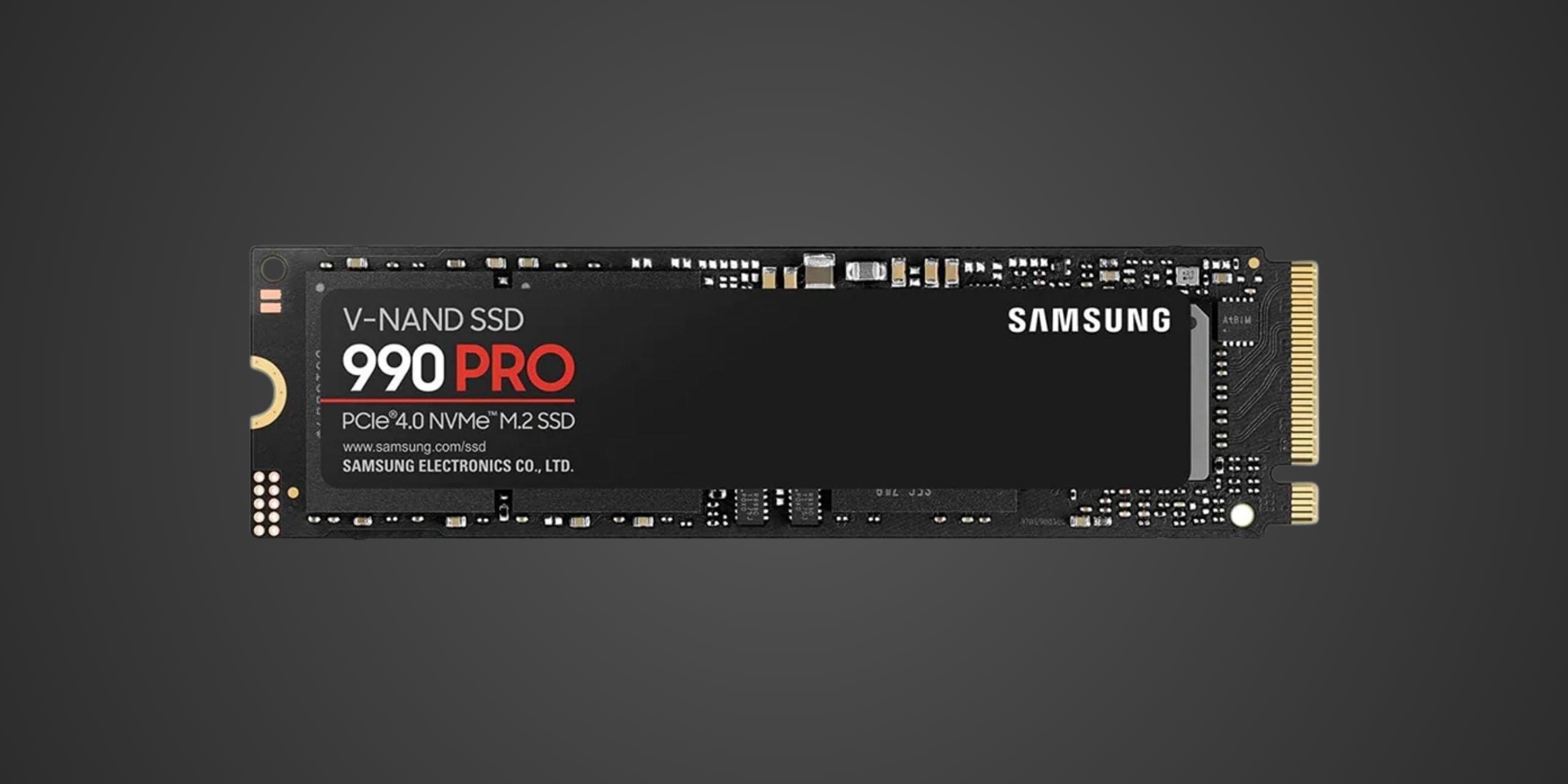
Table of Contents
Introduction
The Samsung 990 PRO targets gamers upgrading from SATA or older Gen 3 drives, high-end PC builders seeking top-tier performance, and PlayStation 5 owners looking to expand their storage. This PCIe Gen 4.0 NVMe drive represents Samsung's flagship consumer offering, positioned at the premium end of the market with performance that competes directly with the SK hynix Platinum P41 and WD Black SN850X. After three years of anticipation following the 980 PRO's release, Samsung returns with improved controller technology, new V7 NAND flash, and performance numbers that promise to set new benchmarks in the Gen 4 space.
Product Overview
The Samsung 990 PRO arrives in the standard M.2 2280 form factor, utilizing a PCIe 4.0 x4 interface that maintains broad compatibility while delivering cutting-edge speeds. At its heart sits Samsung's new Pascal controller, manufactured on an 8nm process node and representing a significant evolution from the previous-generation Elpis controller found in the 980 PRO. This ARM-based controller features hardware automation technology that optimizes the NAND data path, reducing processing time through improved cache algorithms and offering more effective low-power mode coverage.
The drive pairs this controller with Samsung's 176-layer V7 TLC NAND flash, marking the first consumer implementation of this advanced memory technology. This flash uses a four-plane design for increased parallelization and employs Cell-on-Periphery architecture, which moves control circuitry underneath the data array rather than alongside it. This innovative approach reduces die surface area while improving power efficiency. Samsung includes 2GB of LPDDR4 DRAM on the 2TB model (1GB on the 1TB version), maintaining an ideal 1:1000 ratio between cache and storage capacity.
Capacity options include 1TB and 2TB at launch, with a 4TB model arriving in 2023. Samsung offers both bare drive versions and variants with an RGB heatsink that meets PCI-SIG D8 standards at 8.2mm total height, ensuring compatibility with the PlayStation 5's strict dimensional requirements.
Performance & Real World Speed
Samsung rates the 990 PRO at up to 7,450 MB/s sequential read and 6,900 MB/s sequential write across all capacities, with random performance reaching up to 1.4 million read IOPS and 1.55 million write IOPS on the 2TB model. These specifications position the drive as one of the fastest PCIe 4.0 options available, exceeding the previous 980 PRO and matching or surpassing competing flagship drives.
In practical gaming scenarios, the 990 PRO delivers noticeably faster game load times compared to SATA SSDs or older Gen 3 drives. DirectStorage API readiness means the drive stands prepared for next-generation gaming workloads that can bypass the CPU and send decompressed assets directly to the GPU. Windows boot times see measurable improvements, while large file transfers for video editing projects or game installations benefit from sustained high-speed performance. The drive's enhanced 4K random read performance at queue depth 1—a crucial metric for everyday responsiveness—translates to snappier application launches and system operations that users will feel in daily use.
The 990 PRO's four-plane NAND architecture enables higher bandwidth through increased parallelization, while the controller's hardware automation reduces I/O bottlenecks that typically emerge as drives scale to greater complexity. Samsung's implementation of SLC caching helps maintain burst performance during intensive workloads, though sustained write speeds eventually settle to lower levels once the cache fills, a characteristic behavior across most consumer SSDs.
Thermal Management
PCIe 4.0 drives like the 990 PRO generate considerable heat during sustained operations, making thermal management essential for maintaining peak performance. Samsung addresses this through multiple approaches, starting with a nickel-plated controller that improves heat dissipation. The drive employs Dynamic Thermal Guard technology, which actively monitors temperatures and adjusts performance dynamically to prevent thermal throttling. This adaptive system helps maintain consistency during gaming sessions or extended file transfers.
The bare drive includes heat spreader labels on both sides that provide basic thermal management adequate for motherboards with robust M.2 heatsinks. However, users installing the drive under a graphics card or in systems with limited airflow should seriously consider the heatsink variant or aftermarket cooling solutions. The 990 PRO's V7 NAND flash operates more efficiently than previous generations, contributing to lower overall thermal output, but Gen 4 speeds still demand attention to cooling.
For PlayStation 5 installations, a heatsink is mandatory—the console will not recognize or function with a bare drive in the expansion slot. Samsung's optional heatsink variant meets Sony's strict 11.25mm total height restriction while providing RGB lighting customizable through Samsung Magician software on PC. The heatsink adds $20 to the purchase price but eliminates compatibility concerns and provides adequate cooling for sustained console gaming sessions.
Compatibility
The Samsung 990 PRO requires a motherboard M.2 slot with Key M design and PCIe lanes. The drive maintains backward compatibility with PCIe 3.0 systems, though performance will be limited to Gen 3 speeds. Most modern motherboards with NVMe support can boot from the 990 PRO without issues, and the drive functions seamlessly with Windows, Linux, and macOS operating systems. Power requirements remain typical for high-performance NVMe drives and should not present concerns for standard desktop power supplies.
For PlayStation 5 internal expansion, the 990 PRO meets all requirements when paired with a heatsink. The drive achieves the mandatory 5,500 MB/s minimum read speed Sony specifies, significantly exceeding this threshold with its 7,450 MB/s rating. The M.2 2280 form factor fits properly in the console's dedicated expansion slot, and the heatsink variant's dimensions comply with the 11.25mm height restriction. Installation requires removing the PS5's side panel and cover plate, but the process is straightforward with clear guidance from Sony's official instructions.
However, this drive is explicitly NOT compatible with Xbox Series X or Series S internal storage expansion. Microsoft's consoles require proprietary Seagate Storage Expansion Cards exclusively for internal expansion of Series X|S optimized games. The 990 PRO can only serve Xbox consoles as external storage via a USB enclosure, and in that configuration, it can store and play Xbox One games but can only store (not play) Xbox Series X|S optimized titles.
Strengths & Weaknesses
The Samsung 990 PRO excels in areas that matter most to enthusiast users. Sequential performance places it among the absolute fastest PCIe 4.0 drives tested, with particularly impressive 4K random read speeds at queue depth 1 that deliver tangible system responsiveness improvements. The drive maintains consistency across workloads while running efficiently and relatively cool thanks to its advanced V7 NAND and Pascal controller architecture. Samsung's industry-leading Magician software provides comprehensive monitoring, firmware updates, data migration tools, and performance optimization including a Full Performance Mode for users prioritizing speed over power consumption.
The 990 PRO offers excellent endurance ratings at 600TB of total bytes written per TB of capacity, backed by Samsung's solid five-year warranty and reputation for reliability. The availability of an optional heatsink with RGB lighting addresses both PlayStation 5 requirements and aesthetic preferences for PC builders without the hassle of sourcing third-party cooling solutions. The drive's proven compatibility across platforms—from desktops to laptops to gaming consoles—makes it a versatile choice for users with multiple systems.
However, the 990 PRO's launch pricing initially positioned it too high relative to competitors, though market pricing has improved significantly since release. Sustained write performance, while strong, falls slightly below expectations given the drive's flagship positioning, with post-cache speeds settling lower than some competing drives. Users already running comparable PCIe 4.0 drives like the 980 PRO, Platinum P41, or SN850X may find the performance gains insufficient to justify an upgrade cost. Those requiring absolute cutting-edge speeds for professional workflows might look toward emerging PCIe 5.0 options, though the 990 PRO remains more than adequate for gaming and content creation. Systems lacking proper cooling solutions may not fully realize the drive's performance potential without additional thermal management.
The competition from the SK hynix Platinum P41 and Western Digital SN850X remains fierce, with all three drives trading victories across different workload types. Real-world pricing often determines the best value proposition among these flagship options rather than raw performance specifications.
Verdict: Should You Buy It?
Buy this if:
- You're upgrading from a SATA SSD or PCIe Gen 3 drive and want immediately noticeable performance improvements in game loading, file transfers, and system responsiveness
- You're building a new high-end gaming PC or workstation and want proven flagship performance from a trusted manufacturer
- You need to expand your PlayStation 5 storage with a drive that exceeds Sony's requirements while offering optional RGB heatsink compatibility
- You value Samsung's comprehensive software ecosystem, including Magician's monitoring, optimization, and migration tools
- You prioritize endurance and reliability with a 600TB per TB rating backed by a five-year warranty
Skip this if:
- You already own a comparable PCIe 4.0 flagship drive like the 980 PRO, SN850X, or Platinum P41 and the marginal performance gains don't justify the upgrade cost
- Better pricing is currently available from competing brands at your desired capacity point
- Your specific workflow demands PCIe 5.0 speeds, though these remain largely unnecessary for gaming and typical consumer use cases
- Your system lacks adequate cooling infrastructure for sustained high-performance operation, unless you're willing to invest in proper thermal management solutions