
Sabrent Rocket 4 Plus G
The First DirectStorage-Optimized SSD That Still Feels Like a Promise
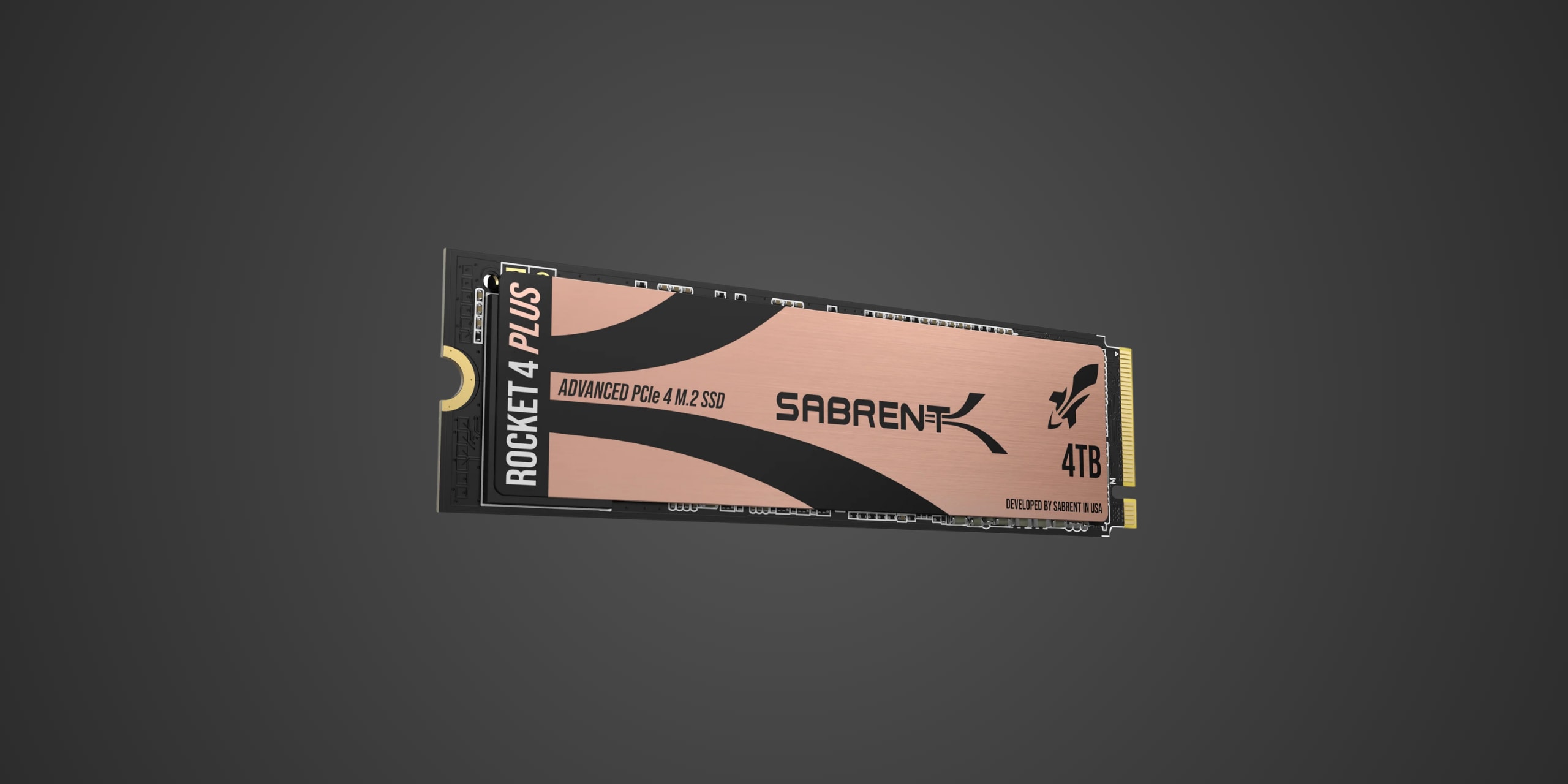
Table of Contents
Introduction
If you're a PC gamer who's been breathlessly following Microsoft's DirectStorage announcements—the technology that's supposed to revolutionize game loading by letting your GPU decompress assets directly from your SSD—you've probably already bumped into a frustrating reality: barely any games actually use it. The Sabrent Rocket 4 Plus G arrives as the storage industry's answer to this chicken-and-egg problem, delivering the world's first retail SSD with firmware specifically engineered for DirectStorage workloads. This isn't just Sabrent slapping a "gaming" label on an existing drive and calling it a day—it's a genuine engineering collaboration between Sabrent and Phison Electronics that rewrites the rules on sustained random read performance, the exact workload DirectStorage hammers hardest.
Built around faster 1,600 MT Micron B47R flash compared to the 1,200 MT memory in standard Rocket 4 Plus drives, and fortified with Sabrent's proprietary O₂ GO firmware, the Rocket 4 Plus G targets gamers who refuse to let today's hardware limitations hold back tomorrow's software potential. Available in 1TB, 2TB, and 4TB capacities, the drive launched at $169.99, $299.99, and $699.99 respectively—a premium over the standard Rocket 4 Plus that sparked immediate questions about whether firmware optimization justifies the price increase. The answer, frustratingly, depends entirely on whether game developers actually embrace DirectStorage in meaningful numbers over the next few years.
Product Overview
The Sabrent Rocket 4 Plus G is built around a PCIe 4.0 x4 M.2 2280 form factor—the standard 80mm length that fits virtually every desktop motherboard and many laptops with M.2 slots. Measuring 80 x 22 x 3.5mm and weighing approximately 8 grams, it's roughly the size of a stick of gum but considerably thinner. What immediately distinguishes this drive from its Rocket 4 Plus sibling is the iridescent copper-toned label that catches light with an oil-slick shimmer, replacing the standard drive's more subdued branding. Sabrent clearly wanted this drive to stand out visually, even if it'll spend most of its life buried under a motherboard heatsink where nobody will ever see it.
At the heart of the Rocket 4 Plus G sits Phison's proven PS5018-E18-41 controller—the same eight-channel, penta-core ARM processor that powered the fastest PCIe 4.0 drives of its generation. This controller pairs with Micron's 176-layer 3D TLC NAND flash memory, specifically the faster 1,600 MT B47R variant that Sabrent upgraded to for this G-series launch. The drive includes DRAM cache—1GB on the 1TB model, 2GB on the 2TB, and 4GB on the 4TB—giving it a critical performance advantage over DRAM-less alternatives when handling sustained workloads. Each capacity tier uses a progressively larger SLC cache: 110GB on the 1TB, 226GB on the 2TB, and a massive 440GB on the 4TB model. Once these caches fill during sustained writes, performance drops to 1,970 MB/s on the 1TB and approximately 3,900 MB/s on the larger capacities—not disastrous, but definitely noticeable if you're moving hundreds of gigabytes at once.
The real magic happens in firmware. Sabrent's O₂ GO firmware represents a collaborative development effort with Phison Electronics specifically targeting DirectStorage's demands—sustained high queue depth random reads with minimal read disturb interference. In testing by multiple review outlets, the Rocket 4 Plus G delivered sustained random read performance that actually exceeded Intel's legendary Optane P5800X enterprise drive, maintaining consistent throughput for over 20 hours straight without the performance dips that plague conventional SSDs under sustained random workloads. That's genuinely impressive engineering, even if the real-world gaming benefits remain hypothetical until more titles implement DirectStorage.
Sabrent backs the Rocket 4 Plus G with a five-year warranty when registered within 90 days of purchase through their Rocket Control Panel software—fail to register and you're stuck with just one year of coverage, so don't skip this step. Endurance ratings hit 700 TBW per terabyte of capacity, meaning 700 TBW for the 1TB model, 1,400 TBW for the 2TB, and 2,800 TBW for the 4TB. These are solid endurance figures that translate to writing 38GB per day for five years on the 1TB model—more than enough headroom for even aggressive gaming workloads. All Sabrent SSDs include complimentary access to Acronis True Image for easy drive cloning and the company's Rocket Control Panel management software for health monitoring and firmware updates.
Performance & Real World Speed
Sabrent claims sequential read speeds up to 7,300 MB/s and writes ranging from 6,000 MB/s on the 1TB model to 6,900 MB/s on the 2TB and 4TB variants. Random performance specs hit up to 350,000 read IOPS and 700,000 write IOPS on the 1TB, scaling to 650,000 read and 700,000 write IOPS on the larger capacities. These specifications position the Rocket 4 Plus G right at the PCIe 4.0 performance ceiling, competing directly with flagship drives from Samsung, Western Digital, and Crucial.
In real-world testing conducted by multiple reviewers, the drive lives up to these promises impressively. Sequential read speeds consistently hit 7,200-7,300 MB/s across various benchmark tools, with sequential writes peaking at 6,800-6,900 MB/s on the 2TB and 4TB models. The 1TB model does sacrifice some write performance, typically landing around 6,000 MB/s, but this remains faster than many competing drives. Random performance at realistic queue depths—the workloads you'll actually encounter in daily use—shows the Rocket 4 Plus G trading blows with the best PCIe 4.0 drives available, with neither significant advantages nor concerning weaknesses in typical desktop scenarios.
Where things get interesting is in DirectStorage-specific testing. Multiple review outlets ran simulated DirectStorage workloads that hammer drives with sustained high queue depth random reads—exactly the workload pattern Microsoft's API uses when streaming game assets. The Rocket 4 Plus G absolutely demolished the competition, delivering up to three times the sustained read throughput of rival drives and maintaining consistent performance for over 20 hours without a single read disturb-induced stutter. In one particularly striking benchmark, the drive actually outperformed Intel's Optane P5800X enterprise SSD, which had previously held the crown for sustained random read performance. This represents genuinely impressive firmware optimization work by Sabrent and Phison.
However, there's a critical caveat that dampens enthusiasm: as of December 2024, DirectStorage adoption remains embarrassingly sparse. Forspoken launched as the first DirectStorage-enabled game in early 2023, and subsequent testing showed modest but not revolutionary improvements—PCIe 4.0 drives loaded scenes roughly 77 percent faster than SATA SSDs, but the differences between various PCIe 4.0 drives remained minimal. A handful of other titles have since added DirectStorage support, but the transformative asset streaming and instant world traversal that Microsoft promised remains largely theoretical. The Rocket 4 Plus G's specialized firmware delivers measurable advantages in synthetic DirectStorage benchmarks, but you're essentially betting on game developers embracing the technology en masse over the next few years.
In conventional gaming benchmarks that don't utilize DirectStorage, the Rocket 4 Plus G performs admirably but without meaningful advantages over competing PCIe 4.0 drives. Game load times remain virtually identical to drives like the Samsung 980 Pro or WD Black SN850X, typically within a second or two across various titles. PCMark 10's storage tests—which simulate real-world usage patterns including game loading, application launches, and file operations—placed the drive in the top five of all SSDs tested by multiple outlets, scoring exceptionally well in the Full System Drive Benchmark with results around 5,200 points and bandwidth exceeding 794 MB/s. That's elite-tier performance that translates to a snappy, responsive computing experience even in non-gaming workloads.
Thermal performance deserves mention since PCIe 4.0 drives can throttle when hot. The Rocket 4 Plus G reached peak temperatures around 69°C during sustained 561GB file transfers in testing—warm but not alarming, and comfortably below throttling thresholds when using proper motherboard heatsinks or aftermarket cooling solutions. Sabrent doesn't include a heatsink with the drive, correctly assuming most users will rely on built-in motherboard M.2 thermal solutions, though the company does sell a dedicated gaming heatsink separately for $30 that comes bundled free with the 4TB model.
Build Quality & Durability
The Rocket 4 Plus G continues Sabrent's tradition of understated but quality construction. The drive ships as a bare M.2 circuit board with that distinctive iridescent copper label—no bulky pre-installed heatsinks that might conflict with motherboard cooling solutions or laptop installations. The PCB feels substantial despite its minimal weight, with tight manufacturing tolerances and component placement that suggests quality control standards well above bargain-bin SSDs. The reflective label catches light beautifully with its color-shifting properties, though this aesthetic flourish will be completely hidden the moment you slide the drive under a motherboard heatsink, making it a somewhat pointless but appreciated design detail.
Component quality appears excellent based on teardowns conducted by review outlets. The drive uses genuine Micron 176-layer 3D TLC NAND flash—not the questionable no-name flash memory that sometimes appears in budget drives after launch. The Phison PS5018-E18 controller represents the proven top-tier solution for PCIe 4.0 performance, paired with proper DRAM cache from SK Hynix rather than relying on Host Memory Buffer tricks. This is a properly specced drive using quality components throughout, which inspires confidence in its long-term reliability.
The five-year warranty—assuming you remember to register the drive—serves as Sabrent's confidence statement in the hardware's longevity. The 700 TBW per terabyte endurance rating matches industry norms for premium TLC drives, providing ample headroom for typical consumer workloads. For context, gaming typically involves far more reading than writing, meaning your endurance budget lasts considerably longer than raw TBW numbers might suggest. Even aggressive users writing 50GB daily would need over three years to exhaust the 1TB model's endurance rating—by which point you'd likely be upgrading anyway.
Installation requires nothing more than slotting the drive into an available M.2 socket and securing it with the retention screw. Most modern motherboards include M.2 heatsinks that work perfectly with the Rocket 4 Plus G's standard dimensions, though you'll need to ensure your motherboard BIOS is set to PCIe 4.0 mode rather than 3.0 if you want maximum performance. The drive works fine in PCIe 3.0 slots, simply maxing out around 3,500 MB/s—still faster than SATA but obviously not taking advantage of its full capabilities.
Compatibility
The Sabrent Rocket 4 Plus G works with any system featuring an M.2 socket that supports NVMe SSDs, which encompasses virtually every desktop motherboard and many laptops released since roughly 2017. This is a standard M.2 2280 form factor drive using the universal NVMe 1.4 protocol over a PCIe 4.0 x4 interface, meaning compatibility is exceptionally broad. Desktop users with AMD Ryzen 3000-series or newer processors, Intel 11th-generation Core or newer, or any recent enthusiast platform will have native PCIe 4.0 support. Older systems running PCIe 3.0 interfaces work fine but limit the drive to approximately 3,500 MB/s maximum speeds—still respectable performance, just not utilizing the drive's full potential.
The drive functions perfectly well with Windows 10, Windows 11, Linux distributions, and macOS with appropriate M.2-to-USB adapters or Hackintosh setups. Windows 11 includes DirectStorage support natively, while Windows 10 version 1909 and newer can also leverage DirectStorage capabilities once games implement support. That said, DirectStorage remains the province of Windows gaming—PlayStation 5 and Xbox Series consoles use their own proprietary storage solutions that aren't compatible with standard PC SSDs like the Rocket 4 Plus G.
For PlayStation 5 users specifically, the Rocket 4 Plus G meets Sony's specifications for internal SSD expansion—the drive's 7,300 MB/s sequential read performance exceeds Sony's 5,500 MB/s minimum requirement, and the standard M.2 2280 form factor fits the console's expansion bay when paired with an appropriate heatsink. However, Sony's PS5 doesn't support DirectStorage or Host Memory Buffer, rendering the Rocket 4 Plus G's specialized firmware optimizations completely irrelevant in PlayStation usage. You'd be paying a premium for features the console can't use, making standard PCIe 4.0 drives with similar raw performance more sensible choices for PS5 expansion.
Laptop compatibility depends entirely on whether your specific model includes M.2 2280 sockets—many gaming laptops do, but ultraportables often use shorter 2242 or 2230 form factors or soldered storage. Check your laptop's service manual before purchasing. The drive's lack of a pre-installed heatsink actually helps in cramped laptop installations where vertical clearance is limited, though you'll want to monitor temperatures since laptop cooling is generally less effective than desktop solutions.
Critically, you need to understand that the Rocket 4 Plus G's DirectStorage optimization only matters if you're running Windows 10 or 11 and playing games that specifically implement DirectStorage support. As of late 2024, that's a disappointingly short list of titles including Forspoken, Ratchet & Clank: Rift Apart, and a handful of others. The specialized firmware provides no advantages whatsoever in general computing tasks, conventional gaming workloads, or on platforms that don't support DirectStorage. You're essentially paying extra to future-proof against a gaming API that may or may not achieve widespread adoption over the drive's lifespan.
Strengths & Weaknesses
The Rocket 4 Plus G's greatest strength lies in its specialized firmware engineering and the genuinely impressive sustained random read performance that results. Sabrent and Phison clearly invested serious development resources into optimizing for DirectStorage workloads, and the results speak for themselves—this drive dominates synthetic DirectStorage benchmarks by margins that border on absurd, maintaining consistent throughput for extended periods without the read disturb interference that causes stuttering in competing drives. For users who believe DirectStorage will eventually become the standard for PC gaming, the Rocket 4 Plus G represents genuine future-proofing backed by measurable technical advantages rather than marketing hype.
Beyond its DirectStorage specialization, the drive delivers excellent all-around performance that competes with the best PCIe 4.0 SSDs available. Sequential speeds consistently hit 7,300 MB/s reads and 6,900 MB/s writes on the larger capacities, random performance remains competitive across realistic workloads, and real-world responsiveness in PCMark 10 testing places it among the elite performers. The combination of quality components—Micron's 176-layer flash, Phison's proven E18 controller, proper DRAM cache—ensures consistent performance without the gotchas that plague budget alternatives. The five-year warranty and substantial 700 TBW per terabyte endurance rating provide peace of mind for long-term reliability, assuming you remember to register the drive.
The build quality and component selection inspire confidence despite the drive's competitive pricing relative to other flagship PCIe 4.0 models. You're getting genuine premium flash memory, a proven top-tier controller, and proper DRAM cache rather than cost-cutting shortcuts. Sabrent's inclusion of complimentary Acronis True Image cloning software and their Rocket Control Panel management utility adds value beyond the hardware itself, making drive migration and health monitoring straightforward even for less technical users.
However, the Rocket 4 Plus G isn't without notable limitations, and the most glaring centers on the entire DirectStorage value proposition. You're paying a premium over the standard Rocket 4 Plus—typically $20-40 more depending on capacity and current street prices—for firmware optimization that only benefits you if game developers actually embrace DirectStorage in meaningful numbers. As of late 2024, nearly two years after the technology's Windows debut, adoption remains sparse enough that the Rocket 4 Plus G's specialized firmware provides essentially zero practical advantage in the vast majority of gaming scenarios. The drive performs excellently in conventional workloads, but so do competing drives that cost less.
This creates a frustrating gamble for buyers. Are you betting on DirectStorage becoming the standard over the next few years, justifying today's premium pricing? Or will the technology languish in obscurity like so many other promising-but-underutilized gaming APIs, leaving you with an excellent but overpriced SSD? The answer likely depends on your timeline and risk tolerance. If you're building a system you plan to keep for five years and believe Microsoft will eventually push DirectStorage adoption through Xbox/Windows ecosystem integration, the Rocket 4 Plus G makes more sense. If you upgrade storage more frequently or prioritize immediate value over future potential, standard PCIe 4.0 drives offer similar performance today at lower prices.
The capacity limitations also deserve mention, particularly the absence of an 8TB option that the standard Rocket 4 Plus line eventually added. Gamers with massive libraries who want to keep everything installed simultaneously top out at 4TB for $699.99 at launch pricing—expensive enough that you could alternatively buy two 4TB standard Rocket 4 Plus drives or competing models for similar money and double your storage capacity. The 1TB model's reduced sequential write performance of 6,000 MB/s versus 6,900 MB/s on larger capacities also feels slightly limiting, though real-world impact remains minimal for gaming workloads.
The fundamental weakness affecting the Rocket 4 Plus G—and indeed all premium gaming SSDs—is the persistent question of whether spending extra on cutting-edge storage actually improves your gaming experience in perceptible ways. Multiple independent benchmarks have demonstrated that load time differences between mid-tier and flagship PCIe 4.0 drives typically measure in seconds at most, with in-game performance remaining completely identical. You're paying premium prices for marginal reductions in time spent staring at loading screens, which matters intensely to some users and barely registers for others. The Rocket 4 Plus G exacerbates this value equation by adding DirectStorage-specific optimization that currently provides no tangible benefit in the overwhelming majority of games.
Verdict: Should You Buy It?
Buy this if:
- You're building or upgrading a Windows 10 or Windows 11 gaming PC with DirectStorage support, believe Microsoft will successfully drive developer adoption of the API over the next few years, and value future-proofing over immediate cost savings—particularly if you're assembling a system you plan to keep for five-plus years and want storage performance that won't become a bottleneck as games increasingly leverage next-generation asset streaming technologies
- You already own or plan to play the handful of DirectStorage-enabled titles currently available and want maximum performance in those specific games
- You simply want the satisfaction of owning the only retail SSD specifically engineered for DirectStorage workloads backed by genuinely impressive sustained random read performance that measurably dominates competing drives in synthetic benchmarks even if real-world gaming benefits remain theoretical for now
Skip this if:
- You upgrade components frequently enough that paying a premium for potential future benefits feels financially foolish
- You prioritize immediate value and would rather spend $20-40 less on a standard Rocket 4 Plus or competing PCIe 4.0 drive that delivers virtually identical performance in the games you're actually playing today
- You're building a PlayStation 5 or Xbox Series console expansion setup where the drive's DirectStorage firmware provides zero benefit and you'd be better served by cheaper alternatives with similar raw sequential read speeds
- You're skeptical about DirectStorage adoption rates and view the technology as another overhyped gaming API that will join the long list of features that sounded revolutionary but never gained traction
- You simply need maximum storage capacity per dollar and would prefer buying a larger standard drive rather than paying extra for specialized firmware you may never actually utilize in meaningful ways