
Crucial P310 2280
Next-Gen Speed on a Budget?
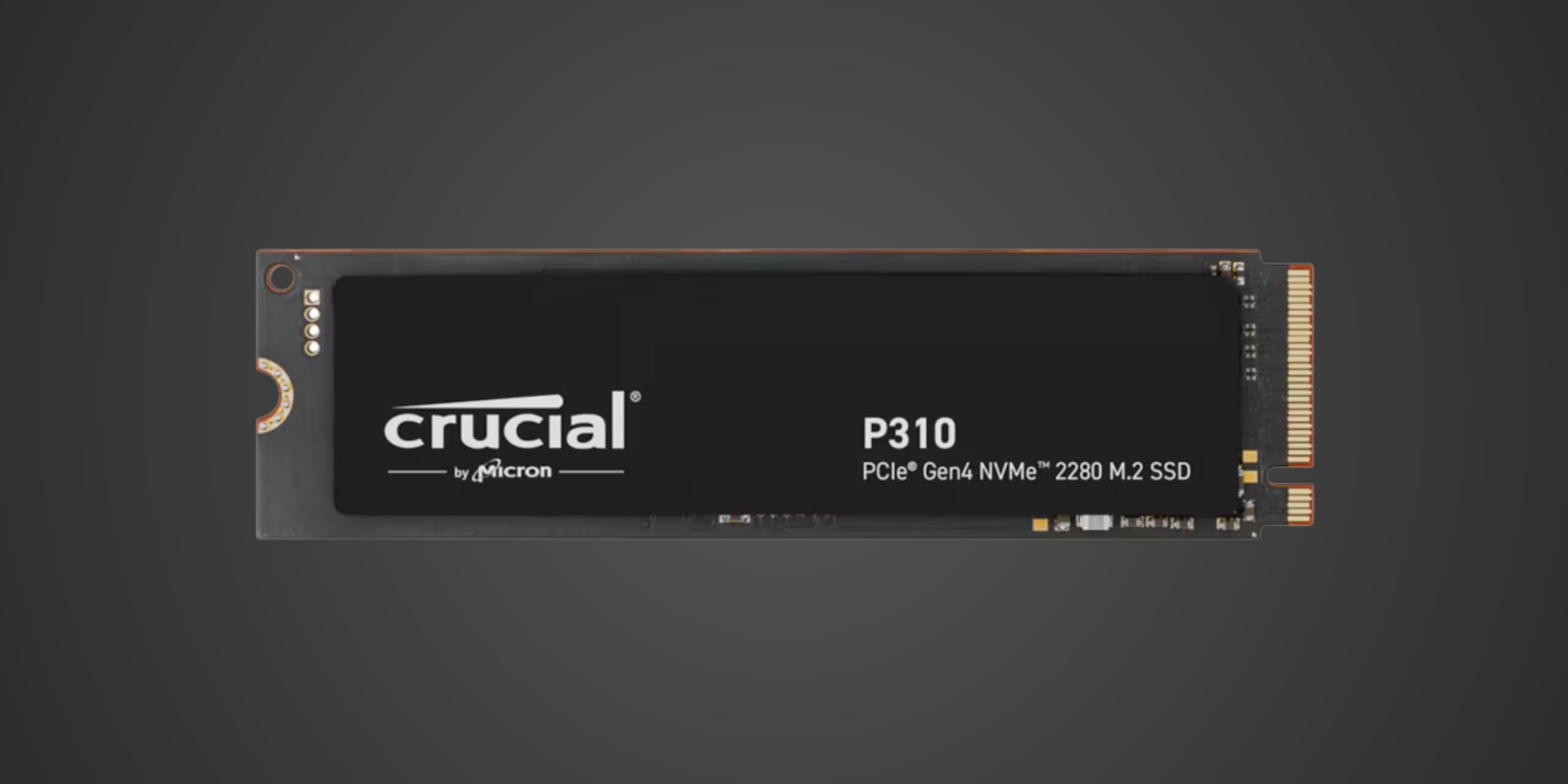
Table of Contents
Introduction
Building a PC or upgrading your laptop used to require a difficult choice: spend a fortune for top-tier speed, or save money and settle for "good enough." The Crucial P310 2280 aims to eliminate that compromise.
This drive is designed for gamers, students, and budget-conscious PC builders who want the snap and responsiveness of a high-end PCIe Gen 4.0 drive without paying the "Pro" tax attached to flagship models. Sitting comfortably in the mid-to-high range of the market, it replaces older budget favorites by offering speeds that were considered enthusiast-class just a year ago.
Product Overview: Under the Hood
The Crucial P310 utilizes the standard M.2 2280 form factor, meaning it fits into almost any modern desktop motherboard and most laptops. It uses the PCIe Gen 4.0 x4 interface, which is currently the sweet spot for performance and price.
To achieve its blend of speed and affordability, Crucial pairs the efficient Phison E27T controller with Micron’s advanced 3D QLC NAND.
- Why this matters: While QLC (Quad-Level Cell) flash is generally cheaper and has slightly lower endurance than the TLC found in pro-grade drives, the Phison E27T controller is a modern marvel. It allows this drive to operate without dedicated DRAM (using your system's memory for mapping via HMB technology), keeping the cost down while maintaining blistering burst speeds.
Performance & "Real World" Speed
Don't let the "budget-friendly" label fool you. The Crucial P310 2280 is rated for sequential read speeds of up to 7,100 MB/s and write speeds around 6,000 MB/s.
Here is what those numbers translate to in your daily life:
-
Gaming: This drive nearly maxes out the PCIe Gen 4.0 bandwidth. Game load times will be nearly instantaneous, and texture streaming in open-world titles will be seamless.
-
Windows Boot: You can expect your PC to boot in seconds. The system will feel "snappy" when opening apps or searching files.
-
The Caveat: Because this uses QLC NAND, it relies on a pseudo-SLC cache. If you try to transfer 500GB of files at once, the speed will eventually drop once that cache fills up. However, for 99% of users—gamers and general office workers—you will likely never hit that limit.
Thermal Management
With great speed comes heat. PCIe Gen 4.0 drives running at 7,000+ MB/s generate significant thermal energy. If the controller gets too hot, it will "thermal throttle," intentionally slowing down to prevent damage.
The Phison E27T controller is surprisingly power-efficient, running cooler than older Gen 4 controllers. However, cooling is still recommended.
-
Desktop Users: If your motherboard has a built-in M.2 heat spreader (the metal plate that covers the drive), that is perfectly sufficient.
-
Laptop Users: The drive is efficient enough to run in most laptops without an added heatsink, which is good since most laptops don't have space for one.
Compatibility: PC, PS5 & Consoles
This is one of the most common questions for storage upgrades, so let's be crystal clear:
-
PlayStation 5: YES. The Crucial P310 meets Sony’s requirement for a sequential read speed of 5,500 MB/s (the P310 hits 7,100 MB/s). It will work excellent for playing PS5 games directly. Critical Note: You must attach a heatsink to the drive before installing it in a PS5 to ensure long-term reliability.
-
Xbox Series X/S: NO. This drive cannot be used to play Xbox Series X/S games. The Xbox requires proprietary expansion cards (like those from Seagate or WD). You could only use this in an external USB enclosure for storing older Xbox One games, which defeats the purpose of buying a fast NVMe drive.
-
PC: YES. Compatible with any motherboard featuring an M.2 NVMe slot (Gen 4 recommended for full speed, but backward compatible with Gen 3 at slower speeds).
Strengths & Weaknesses
To help you make an informed decision, here is the breakdown:
Pros:
-
Class-Leading Speed: 7,100 MB/s read is on par with drives that cost significantly more.
-
Energy Efficiency: The DRAM-less design consumes less power, making it a great option for laptop battery life.
-
Value: It offers one of the best price-to-performance ratios currently on the market.
Cons:
-
Sustained Writes: Due to the QLC flash, write speeds can drop significantly during very large, continuous file transfers (100GB+).
-
Lower Endurance: QLC drives generally have a lower TBW (Terabytes Written) rating than TLC drives. It will last for years of gaming, but it isn't ideal for a server or heavy video editing rig.
-
DRAM-less: While HMB tech is good, a drive with dedicated DRAM is technically superior for heavy multitasking.
Verdict: Should You Buy It?
The Crucial P310 2280 is a triumph of modern engineering, squeezing enthusiast-level burst performance out of budget-friendly components.
Buy this if...
-
You are building a gaming PC and want top-tier load times without overspending.
-
You need to expand the storage on your PS5 and are comfortable adding a third-party heatsink.
-
You are upgrading a laptop and want a power-efficient drive that won't drain your battery.
Skip this if...
-
You are a professional video editor or content creator who moves massive 4K/8K video files daily (look for the Crucial T500, Samsung 990 Pro, or WD SN850X instead).
-
You are building a server that requires maximum write endurance.
For the vast majority of users, the Crucial P310 provides the exact same "feel" as the most expensive drives on the market, leaving you with extra cash to spend on a better GPU.