
CORSAIR MP600 PRO XT
Gen 4 Performance That Still Punches Above Its Weight
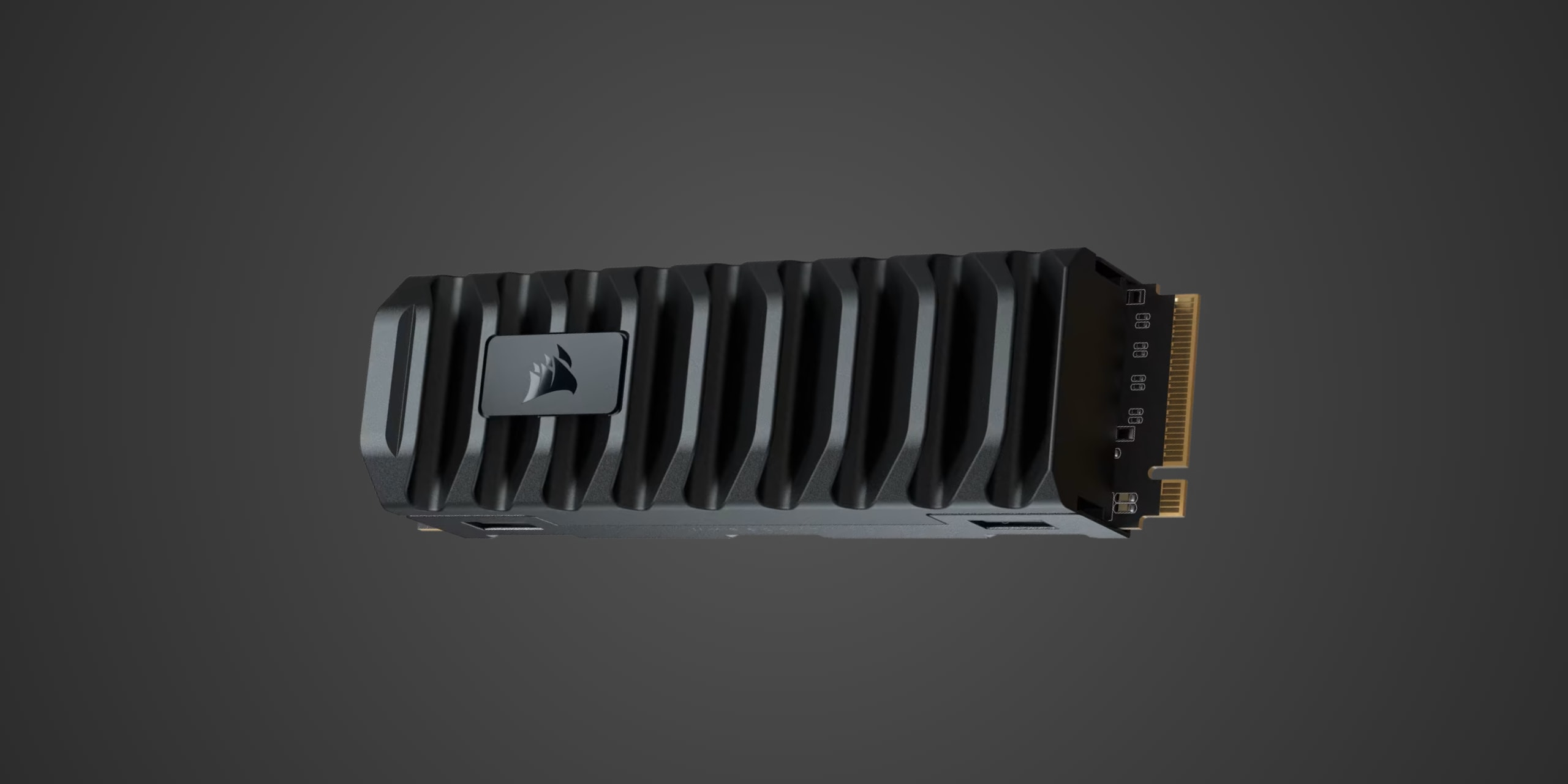
Table of Contents
Introduction
If you're building or upgrading a gaming PC in late 2025, you've probably already bumped into the PCIe Gen 5 hype machine—those blazingly fast drives that promise speeds approaching 15,000 MB/s while lighting your wallet on fire. The CORSAIR MP600 PRO XT arrives as a compelling counterargument to this Gen 5 fever dream, delivering exceptional PCIe Gen 4 performance that still holds its own against newer technology while costing substantially less per gigabyte.
This drive officially launched back in 2021 as Corsair's flagship Gen 4 offering, built around the Phison PS5018-E18 controller paired with Micron's 176-layer 3D TLC NAND—the same hardware combination that powered the Seagate FireCuda 530 to near-legendary status among enthusiasts. Available in capacities ranging from 1TB to a massive 8TB, the MP600 PRO XT targets gamers, content creators, and power users who refuse to settle for middling performance but also won't mortgage their house for marginal Gen 5 speed gains that barely register in real-world use.
Product Overview
The MP600 PRO XT is built around the Phison PS5018-E18 controller, which is an eight-channel beast running a 32-bit ARM Cortex R5 triple-core processor that's rated for speeds up to 7,400 MB/s reads and 7,000 MB/s writes. This isn't just any controller slapped onto commodity NAND—it's specifically engineered to extract maximum performance from Micron's B47R flash, the company's fastest TLC memory at the time of launch.
The drive measures a standard 22 x 80mm in the M.2 2280 form factor, roughly the size of a stick of gum but considerably thicker thanks to the aggressive aluminum heatsink that Corsair wraps around it. Speaking of that heatsink, it's an absolute unit—measuring 20 x 23 x 70mm and weighing in at 57 grams on its own, bringing the total package weight to 68 grams or about 2.4 ounces. That's nearly as heavy as a standard deck of playing cards, and the design is unmistakably Corsair with its ridged black aesthetic and industrial look that screams performance even if you never actually see it once installed.
The heatsink isn't just for show—it features ten vertical fins designed to maximize airflow and surface area, with an aluminum plate on the underside that contacts the drive's components to dissipate heat effectively. This aggressive cooling solution addresses one of Gen 4's biggest challenges: thermal throttling under sustained workloads. Corsair also offers a Hydro X variant with an integrated waterblock for custom loop enthusiasts, though that version is only available in 2TB and 4TB capacities.
Inside, you'll find DRAM cache scaling at 1GB per 1TB of capacity—so 1GB for the 1TB model, 2GB for the 2TB, and so on. The drive employs dynamic SLC caching, with the 2TB model offering a generous 225GB cache that absorbs burst writes at full speed before falling back to around 3,900 MB/s once filled. Endurance ratings are competitive at 700TBW per terabyte for the smaller capacities and 3,000TBW for the 4TB model, all backed by Corsair's five-year warranty—a strong confidence signal in a market where some manufacturers barely offer three years.
Performance & Real World Speed
Corsair claims sequential read speeds up to 7,100 MB/s and write speeds up to 6,800 MB/s for the 2TB and 4TB models, while the 1TB variant sees slightly reduced write performance at 5,800 MB/s. Random performance tops out at 1 million IOPS for reads and 1.2 million IOPS for writes on the larger capacities, with the 1TB model offering 900,000 read IOPS. These are not just marketing numbers pulled from thin air—multiple independent reviewers have verified that the MP600 PRO XT meets and frequently exceeds these specifications in testing.
In real-world testing conducted by Tom's Hardware, PCWorld, and StorageReview, the MP600 PRO XT consistently traded blows with the Seagate FireCuda 530, occasionally edging it out in specific workloads despite sharing nearly identical hardware. CrystalDiskMark results showed sequential reads hitting 7,254 MB/s and writes reaching 6,831 MB/s, while some testers saw peak reads as high as 7,400 MB/s on AMD platforms. These numbers put the MP600 PRO XT squarely in the territory of the fastest Gen 4 drives ever made, falling only slightly behind Gen 5 offerings that cost significantly more.
But here's what actually matters for most users: game loading times, file transfers, and general system responsiveness. In Final Fantasy XIV Shadowbringers load time benchmarks, the drive posted a 10-second load time—essentially indistinguishable from any other high-end SSD, Gen 4 or Gen 5. When copying files during everyday use, sustained speeds hover around 1,200 to 1,800 MB/s depending on file size and type, which translates to moving a 100GB game from another drive in about one minute. The MP600 PRO XT particularly shines in heavily threaded workloads and sustained writes, where it maintained consistent performance even during extended stress testing that would throttle lesser drives into submission.
Build Quality & Durability
Corsair has always excelled at industrial design, and the MP600 PRO XT is no exception. The aluminum heatsink feels substantially more robust than the flimsy heat spreaders found on budget Gen 4 drives, with tight manufacturing tolerances and a solid feel that inspires confidence. The ridged design provides grip when handling the drive during installation while giving it a distinctive appearance that complements black-themed builds—though you'll rarely see it once installed in most M.2 slots.
The heatsink is removable if your motherboard includes its own M.2 cooling solution, but be aware that this thing is thick. At 23mm tall including the heatsink, it won't fit in slots underneath graphics cards or in some laptop applications where clearance is limited. If you're planning to use this in a PlayStation 5, you'll need to remove the heatsink entirely—Sony's internal slot has strict height requirements that this chonky cooler violates.
Manufacturing quality extends to the PCB itself, which features a black coating and component placement that suggests attention to detail rather than cost-cutting. The drive uses Micron's B47R NAND paired with SK Hynix DDR4 cache modules, both industry-leading components that contribute to the drive's impressive endurance ratings. Corsair backs the MP600 PRO XT with 700TBW per terabyte of capacity and a five-year warranty, which should provide peace of mind for anyone concerned about long-term reliability.
Compatibility
The MP600 PRO XT is a standard M.2 2280 NVMe drive compatible with any modern desktop motherboard or laptop that supports PCIe Gen 4 or Gen 3 interfaces. This is universal PC storage that works across Intel and AMD platforms, though you'll need a PCIe Gen 4 capable motherboard and CPU to achieve the drive's full rated speeds—running it in a Gen 3 slot will limit performance to Gen 3 maximums around 3,500 MB/s.
Installation is straightforward if you're comfortable working inside a PC case: locate an M.2 slot on your motherboard, slide the drive in at a 30-degree angle, secure it with the included screw, and you're done. Most modern motherboards include multiple M.2 slots, typically labeled M.2_1, M.2_2, and so on. For optimal performance, use the primary slot that connects directly to the CPU rather than slots that route through the chipset.
PlayStation 5 compatibility requires removing the heatsink to meet Sony's height restrictions, and you'll need to ensure your PS5 firmware is updated to support aftermarket M.2 drives. Once installed, the drive works seamlessly with PS5's custom I/O architecture, delivering load times that match or exceed the internal drive. Just note that Sony requires Gen 4 drives with minimum 5,500 MB/s read speeds, and the MP600 PRO XT comfortably exceeds this threshold.
The drive is not compatible with Xbox Series X or Series S, which use proprietary expansion cards with custom form factors. This is purely PC and PlayStation storage, period.
Strengths & Weaknesses
The MP600 PRO XT's greatest strength lies in its exceptional performance-per-dollar proposition in the Gen 4 space. When it launched at $200 for 1TB, $400 for 2TB, and $990 for 4TB, it undercut the Seagate FireCuda 530 by approximately $100 at comparable capacities while delivering virtually identical performance. Current street prices have dropped even further as the drive ages, with the 1TB model often available around $135 and the 2TB model hovering near $200—making it competitive with mid-tier Gen 4 drives that can't touch its performance ceiling.
Transfer speeds genuinely impress, particularly during sustained workloads where the aggressive heatsink and quality components prevent the thermal throttling that plagues cheaper alternatives. The 225GB SLC cache on the 2TB model is large enough that most users will never fill it during typical usage, meaning you'll consistently see those peak speeds rather than the disappointing post-cache write speeds that afflict drives with stingy caching implementations. Random performance at over 1 million IOPS translates to snappy system responsiveness and near-instant application launches that make even a fast Gen 3 drive feel sluggish by comparison.
The drive's endurance rating of 700TBW per terabyte is above average for consumer SSDs and substantially better than what Samsung, Western Digital, and Crucial offer on many of their Gen 4 competitors. The five-year warranty provides additional peace of mind, and Corsair's reputation for customer support means you're unlikely to face roadblocks if something goes wrong.
However, the MP600 PRO XT isn't without notable limitations. That massive heatsink, while effective at preventing throttling, creates compatibility issues with certain motherboards and laptop installations—if you've got a graphics card that hovers close to your primary M.2 slot, you'll need to either remove the heatsink or find another slot. The drive also lacks some modern features like Microsoft DirectStorage optimization tags that newer Gen 5 drives include, though the real-world impact of this omission remains negligible as of late 2025.
More fundamentally, the MP600 PRO XT launched at a premium price point that has only become more questionable as Gen 4 prices have collapsed across the market. While $135 for 1TB represents decent value in December 2025, you can find competent Gen 4 drives like the Kingston NV2 or TeamGroup MP33 for $80 to $90 that deliver perfectly adequate performance for most users—they just won't sustain the MP600 PRO XT's blistering speeds during extended transfers. The real competition isn't between this and other flagship Gen 4 drives anymore, it's between paying extra for elite Gen 4 performance versus settling for good-enough speeds and pocketing the savings.
The most significant limitation facing any Gen 4 drive in late 2025 is the looming obsolescence question. PCIe Gen 5 drives have dropped from their initial stratospheric pricing, with capable models like the Crucial T705 now available around $180 for 1TB. Gen 5 doesn't provide meaningful advantages for gaming or typical desktop use yet, but if you're building a system you plan to keep for five years, that future-proofing argument becomes harder to dismiss—especially when the price premium has narrowed to $40 to $50.
Verdict: Should You Buy It?
Buy this if:
-
You need elite Gen 4 performance for sustained workloads like video editing, 4K content creation, or large file transfers where the drive's exceptional sustained speeds and thermal management deliver tangible benefits over cheaper alternatives
-
You find the 2TB model on sale for under $200 or the 1TB variant below $120
-
You're not particularly concerned about Gen 5 future-proofing since your workload doesn't benefit from speeds beyond 7,000 MB/s anyway
Skip this if:
-
You're a typical gamer whose primary concern is game load times rather than sustained transfer speeds since a competent mid-tier Gen 4 drive delivers 90% of the real-world performance for 60% of the cost
-
You're building a new high-end system in late 2025 and the modest price premium for Gen 5 seems worthwhile for potential future software optimizations
-
Your motherboard has limited M.2 slot clearance and the MP600 PRO XT's thick heatsink creates installation headaches you'd rather avoid